

 0
0
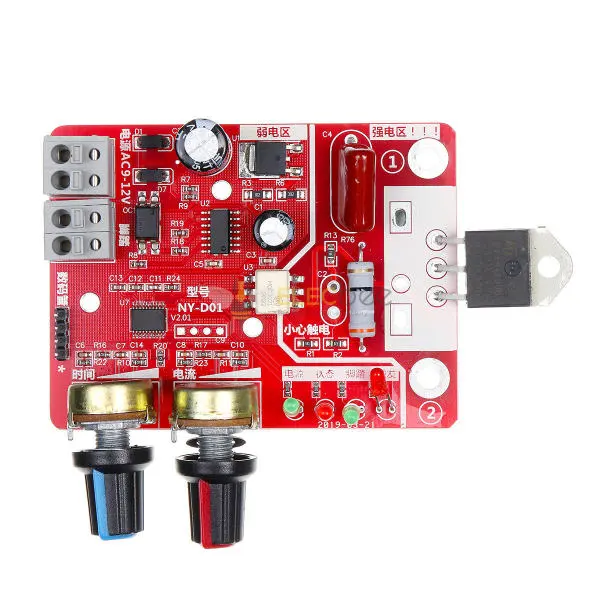
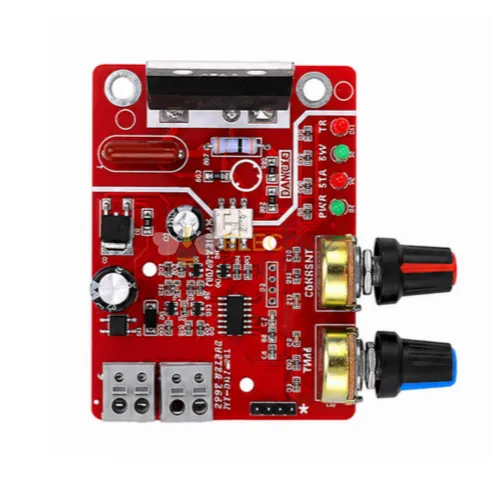
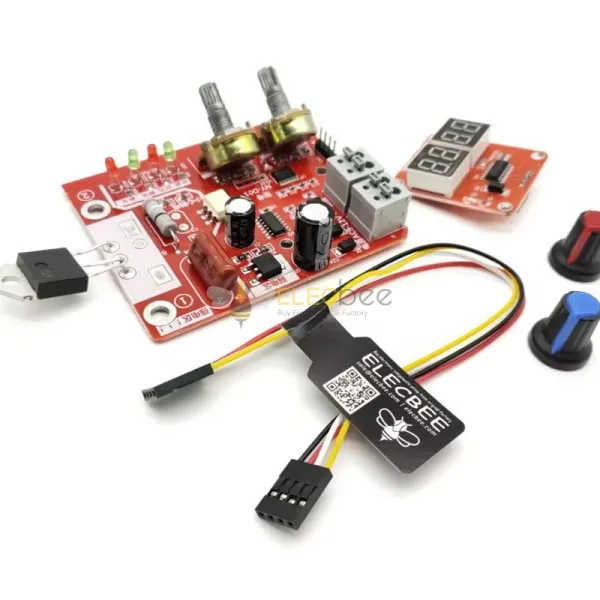
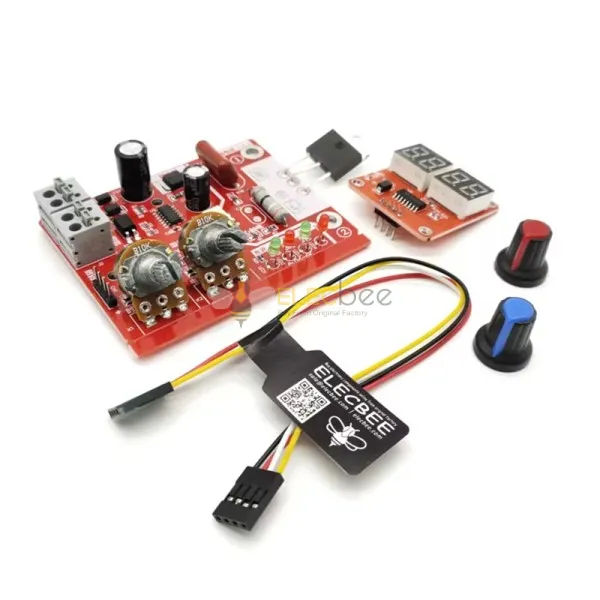
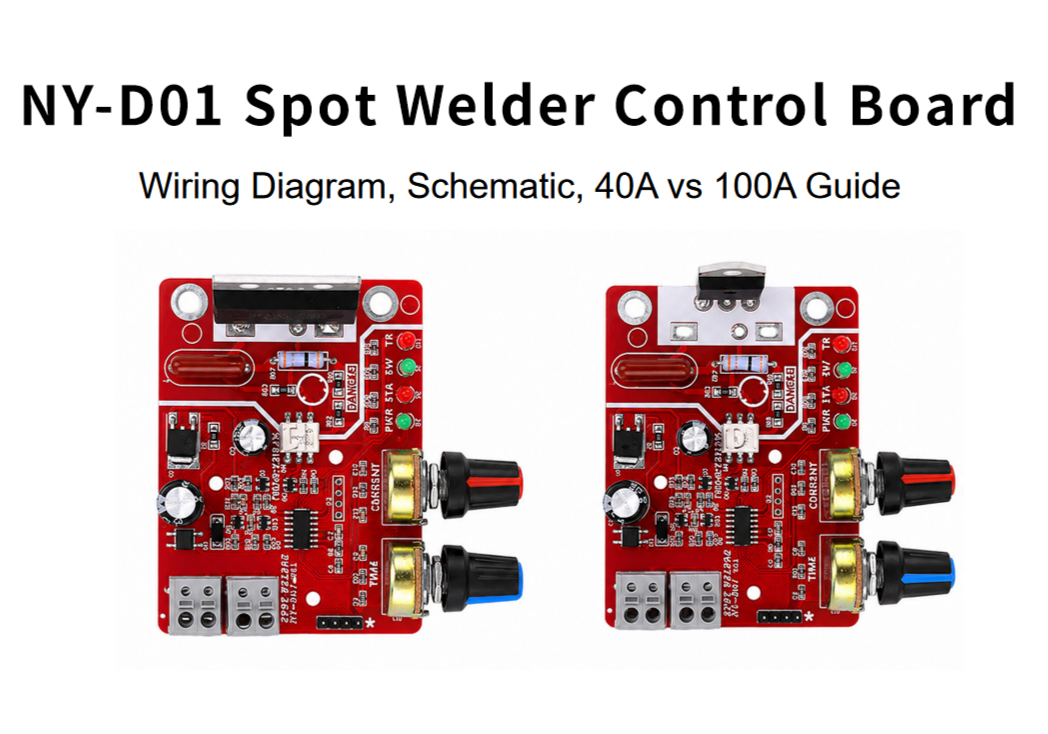
The NY-D01 spot welder control board is a popular low-cost controller used in DIY spot welding machines, especially for 18650 battery pack repair, nickel strip welding, and modified transformer-based spot welders. If you have searched for a budget spot welder and found that small handheld battery welders are too weak for thicker nickel strips, the NY-D01 board is often mentioned as an affordable upgrade path.
However, the NY-D01 is not a complete spot welder by itself. It is a control board that works with a high-current transformer, welding probes, cables, and a proper power setup. That means wiring, transformer selection, and safety are just as important as the control board itself.
This guide explains what the NY-D01 board does, how the basic wiring logic works, what the schematic means in simple terms, and how to choose between the 40A and 100A NY-D01 spot welding control board versions.
1. What Is the NY-D01 Spot Welder Control Board?
The NY-D01 is a timing and current control board designed for DIY resistance spot welding systems. It is commonly used with a modified microwave oven transformer or other high-current transformer to create short welding pulses.
Instead of manually switching a transformer on and off, the NY-D01 board helps control:
- Welding time
- Output trigger timing
- Current control range
- Foot pedal or trigger activation
- More repeatable weld pulses
For battery builders, this matters because a good weld requires a short, strong, and controlled pulse. Too little energy creates a weak joint. Too much energy can burn through the nickel strip, damage the battery cell, or create sparks.
The NY-D01 is commonly used for:
- 18650 battery pack repair
- Cordless tool battery rebuilding
- Nickel strip welding
- DIY transformer spot welders
- Small workshop battery maintenance
It is especially attractive for users who want more power than a tiny handheld battery spot welder but do not want to spend heavily on a professional unit.
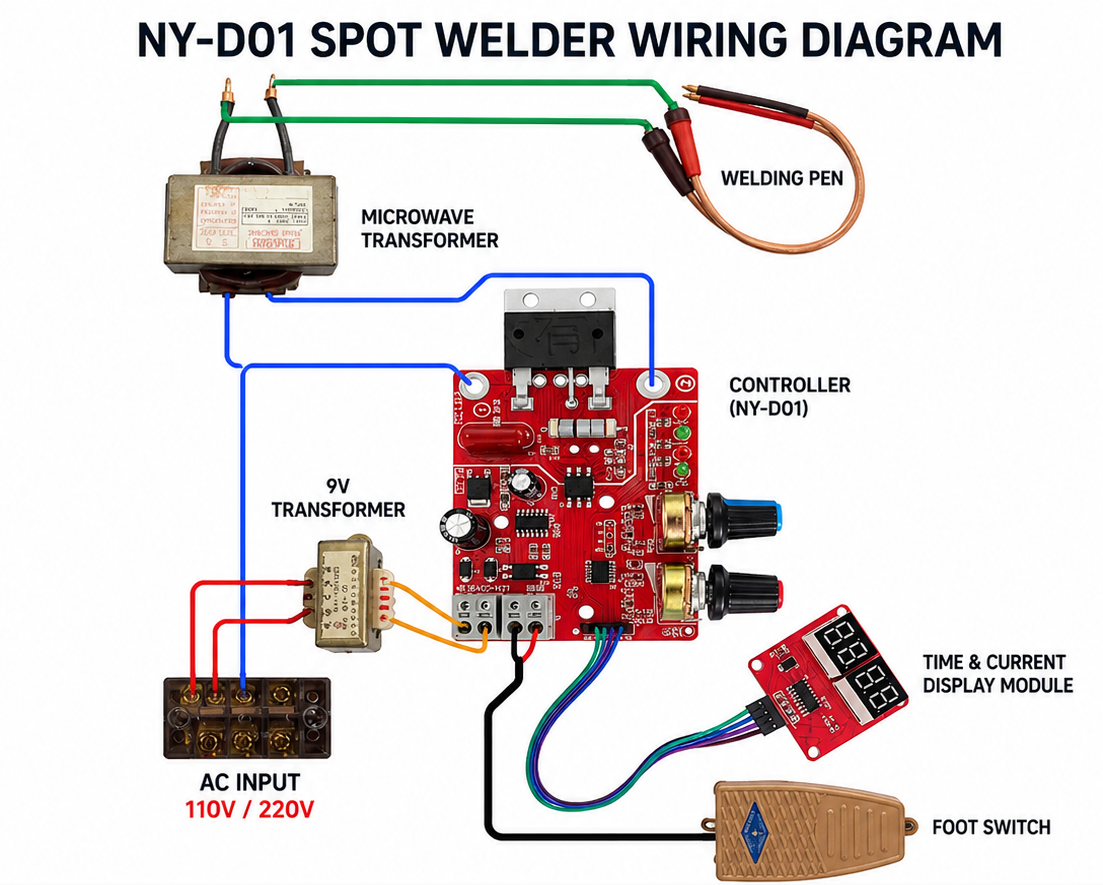
2. NY-D01 Wiring Diagram: Basic Connection Overview
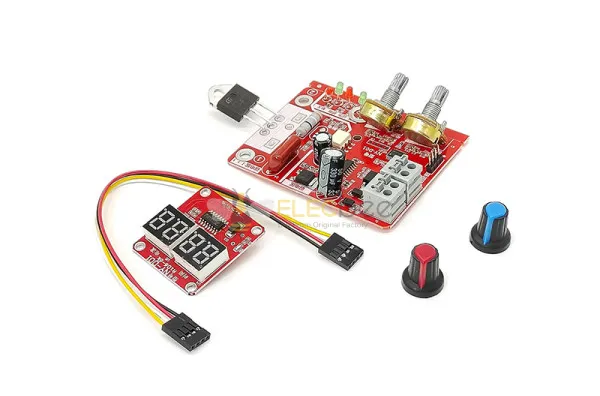
A typical NY-D01 wiring diagram includes several main parts:
| Part | Function |
|---|---|
| AC input | Supplies power to the control side and transformer circuit |
| Transformer | Provides high current for spot welding |
| Control board | Controls timing and switching |
| Foot pedal / trigger | Starts the welding pulse |
| Welding probes | Deliver current to the nickel strip |
| Output cables | Carry high current to the electrodes |
In simple terms, the NY-D01 does not create welding current by itself. The transformer provides the welding power, while the NY-D01 controls when and how long that power is applied.
A basic connection logic looks like this:
- Power enters the control board and transformer circuit.
- The transformer steps down voltage and increases current.
- The NY-D01 board controls the welding pulse timing.
- The user triggers the weld using a button or foot pedal.
- The welding probes press the nickel strip against the battery cell.
- A short current pulse creates a resistance weld.
Important safety note: Transformer-based spot welders can involve dangerous AC mains voltage and very high current. If you are not experienced with AC wiring, transformer insulation, grounding, and electrical safety, do not attempt a DIY build.
3. NY-D01 Schematic Explained in Simple Terms
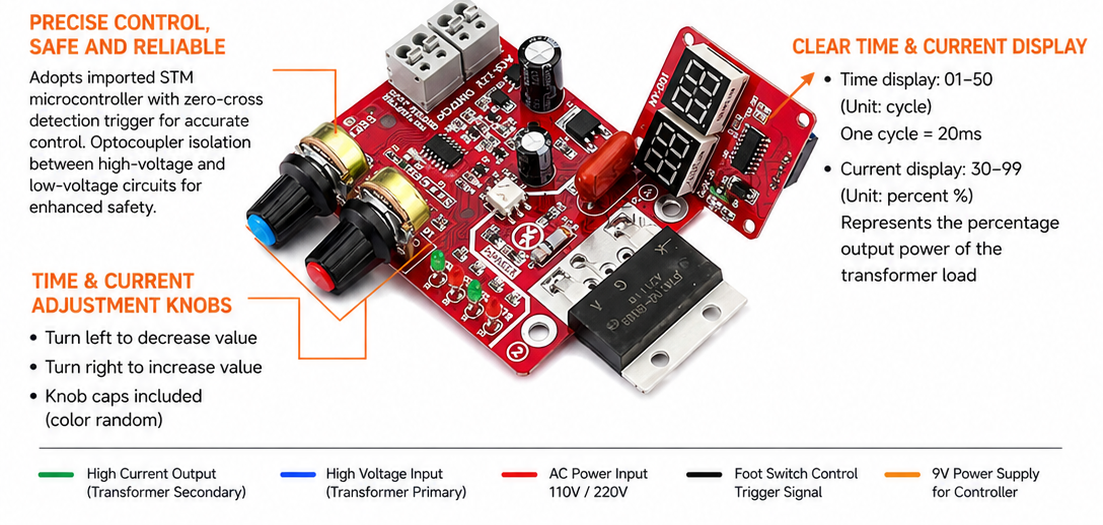
When users search for an NY-D01 schematic, they usually want to understand how the board controls the welding process.
At a high level, the schematic can be understood in three functional blocks:
Control Section
This part manages the timing. It determines how long the welding pulse lasts after the trigger is activated.
Switching Section
This section controls the power switching device. In many systems, the controller switches the transformer input side rather than the welding output side.
User Interface Section
This includes the display, buttons, knobs, or foot pedal input. It allows the user to adjust welding time and current settings.
The final welding performance depends heavily on the transformer, cable thickness, electrode pressure, nickel strip material, and contact resistance.
4. NY-D01 40A vs 100A: Which Version Should You Choose?
| Version | Best For | Advantages | Limitations |
|---|---|---|---|
| NY-D01 40A | Light-duty DIY welding, thin nickel strip | Lower cost, suitable for basic use | Less margin for demanding builds |
| NY-D01 100A | Higher-current welders, larger transformer setups | Better for stronger builds | Needs safer wiring and proper matching |
The 40A version may be enough for occasional light-duty battery repair and thin nickel strips.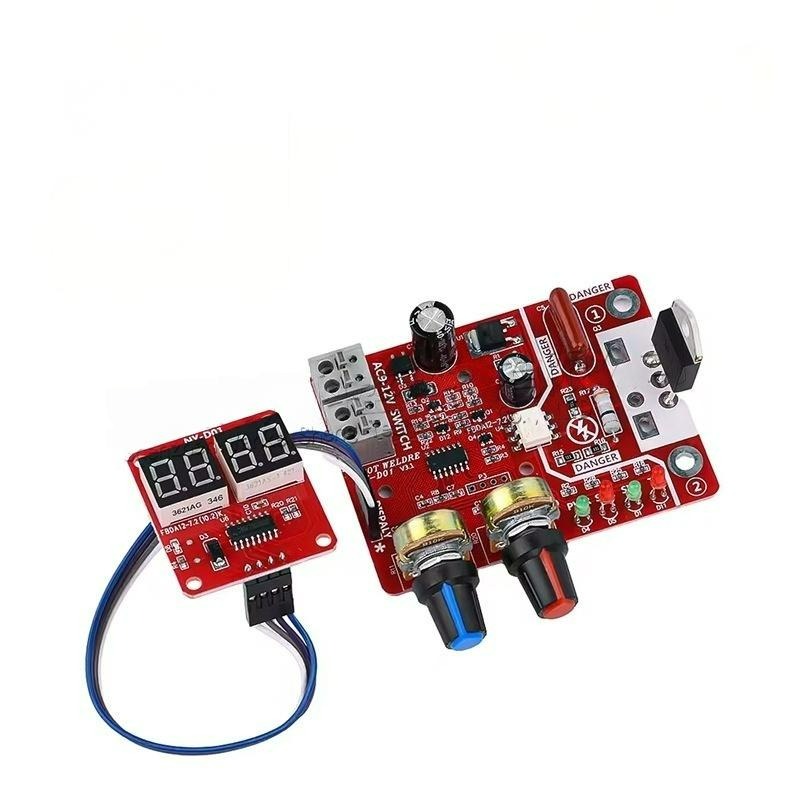
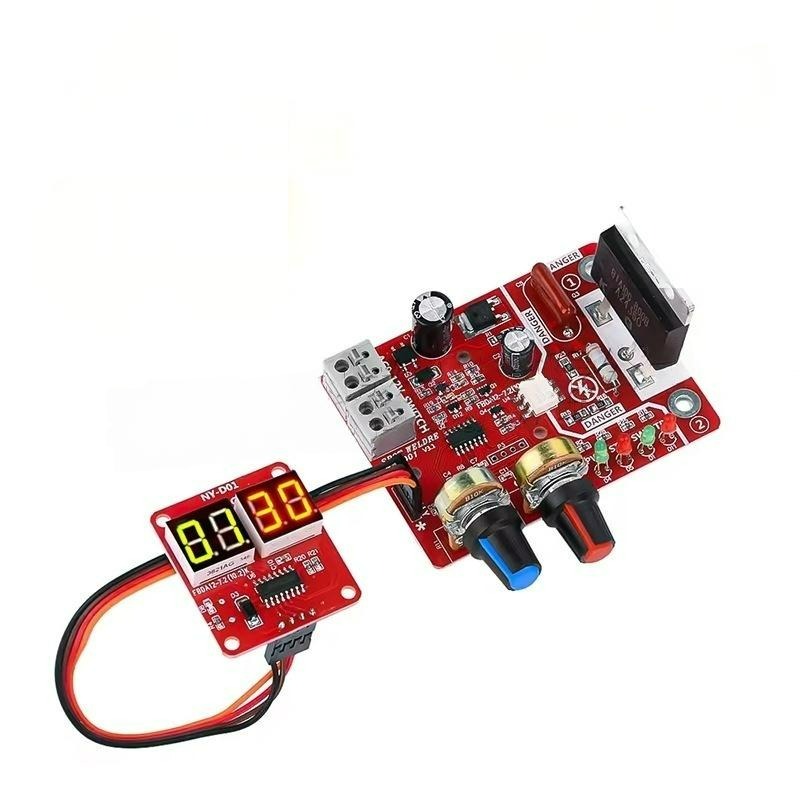
The 100A version is usually more attractive for users building a stronger DIY spot welder, especially for thicker nickel strip or larger transformer setups.
5. Can NY-D01 Weld 0.15mm or 0.2mm Nickel Strip?
The answer depends on the full system, not only the NY-D01 board.
- Transformer size and winding quality
- Secondary cable thickness
- Electrode material and pressure
- Welding pulse time
- Nickel strip type
- Battery cell surface condition
Before welding actual cells, test on scrap strips first. A good weld should tear material rather than detach cleanly.
6. Common Mistakes and Safety Notes
- Using thin output cables
- Poor electrode contact
- Weak transformer output
- Incorrect transformer rewinding
- Too little pressure on the probes
- Dirty or oxidized material
- Wrong strip material
- Trying to weld thick strip with an underpowered setup
The biggest safety risk is the transformer and AC mains side. If you are not familiar with electrical safety, use a ready-made spot welder or ask a qualified technician.
FAQ
Is the NY-D01 suitable for 18650 battery welding?
Yes. It is commonly used for DIY 18650 battery pack welding when paired with a proper transformer and safe wiring.
Is the NY-D01 100A better than the 40A version?
The 100A version offers more headroom, but the 40A version may be enough for light-duty work.
Can NY-D01 weld 0.2mm pure nickel?
Possible, but it depends on the transformer, cable size, pressure, and settings.
Why are my welds weak?
Usually caused by low energy, poor contact, thin cables, weak transformer output, or dirty surfaces.
Conclusion
The NY-D01 spot welder control board is a practical and affordable option for DIY users who want more control than basic handheld welders.
If you are building a spot welder for the first time, remember that the control board is only one part of the system. Safe wiring, transformer matching, cable quality, probe pressure, and testing matter most.
Related products
NY-D01 40A Spot Welder Control Board
NY-D01 100A Spot Welder Controller Board