

 0
0
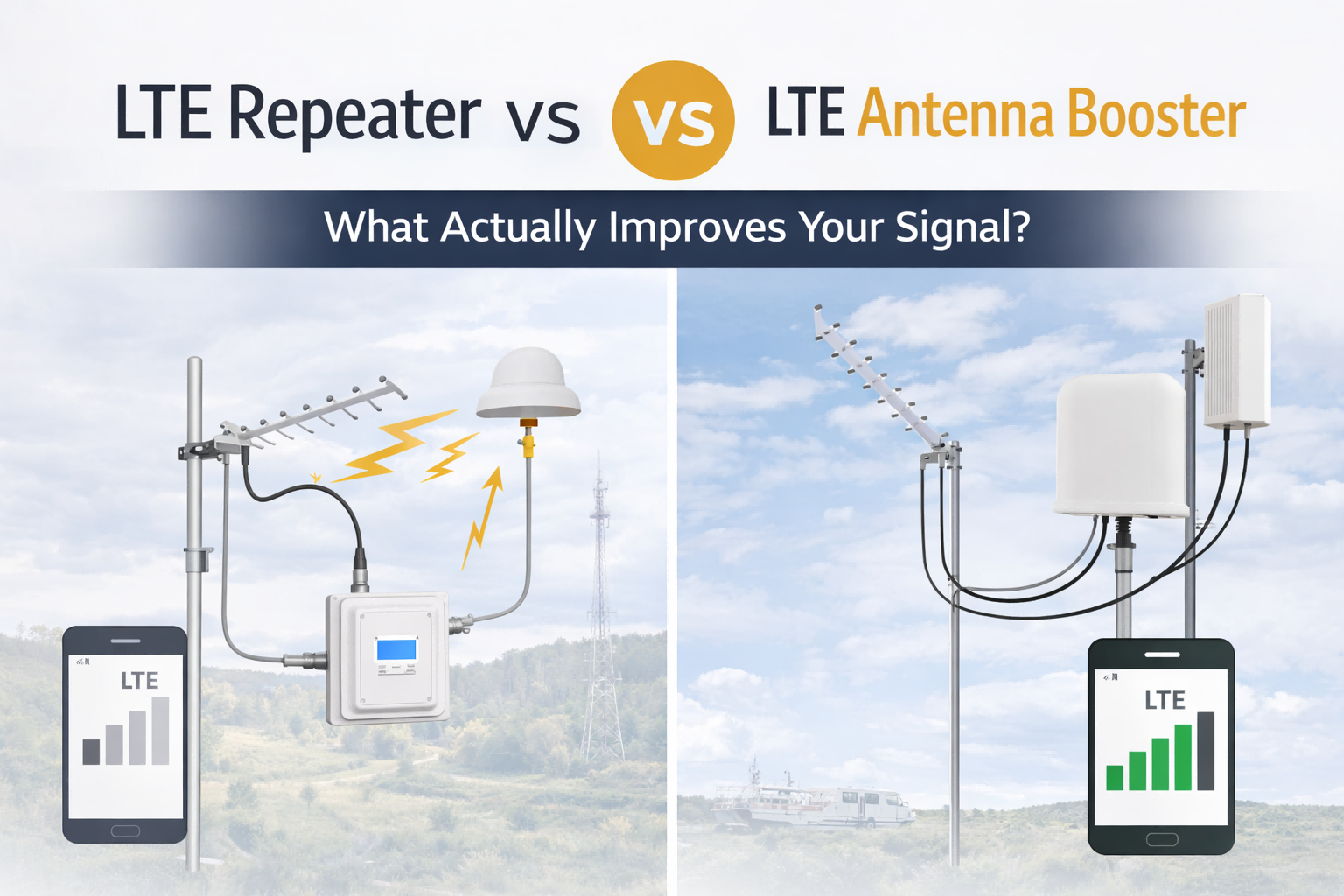
If you live in a rural area, a metal-clad house or spend time in an RV or on a boat, you’ve probably discovered a hard truth: an LTE “4G/5G” plan doesn’t guarantee usable LTE signal. Before you spend hundreds of dollars on an LTE signal booster, it’s worth understanding what actually improves your LTE signal — and when an external antenna is a better investment than a repeater.
This guide breaks down LTE repeater vs LTE antenna booster, explains key concepts like RSRP and SINR, and gives you a practical decision tree based on real-world experience from installers and long-time users.
1. Why Your LTE Signal Is Bad: Strength vs Quality
Most people start with a simple question: “Why do I have 1 bar but still terrible data?” The answer is that the bars on your phone are a crude, often misleading indicator.
Bars vs Reality: RSRP and SINR Explained
LTE performance is driven by a few key metrics:
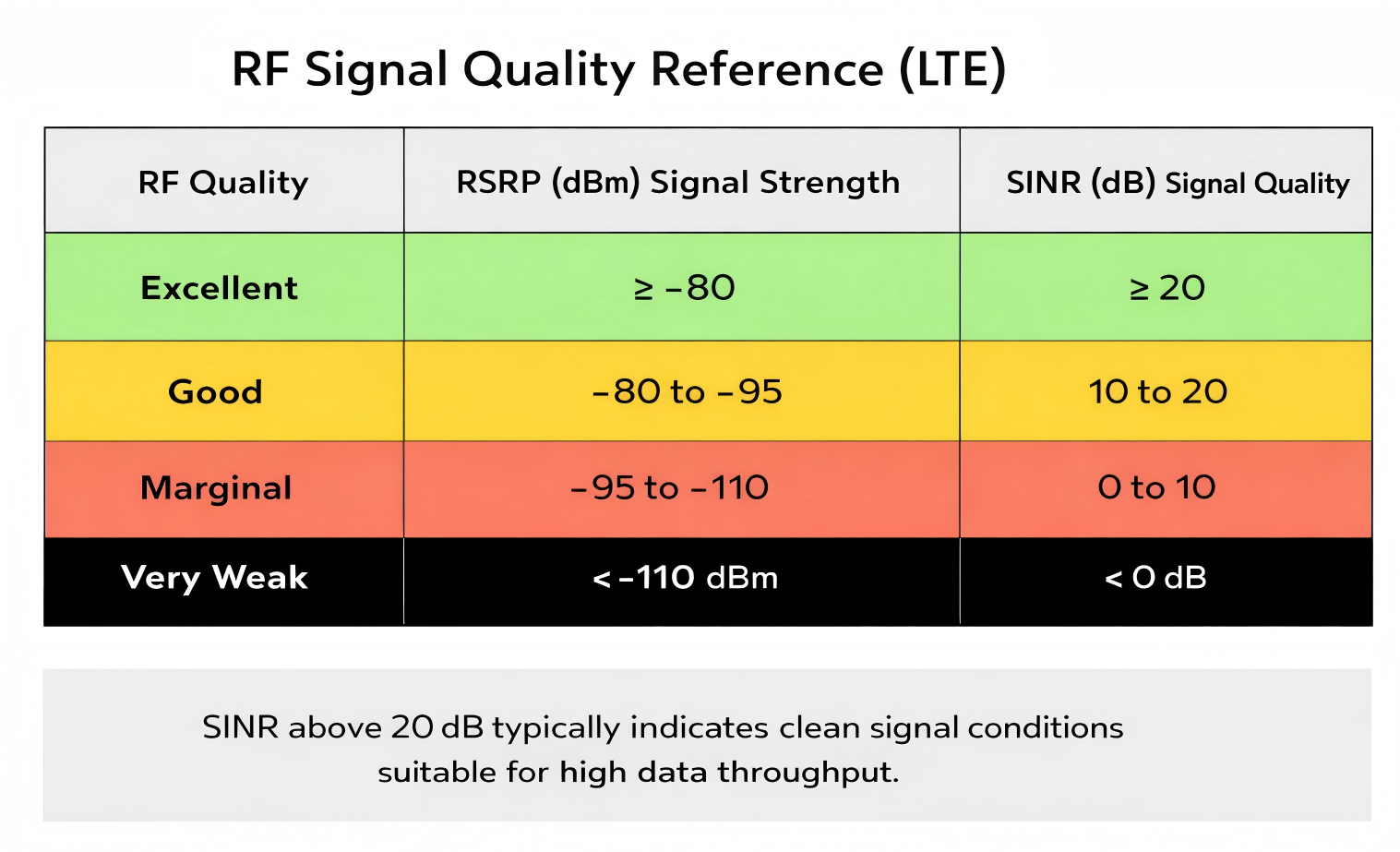
• RSRP (Reference Signal Received Power) – roughly, your signal strength.
○ Around −80 to −95 dBm: usually fine.
○ −95 to −105 dBm: usable but fragile.
○ Below −110 dBm: very weak, often unstable.
• SINR (Signal to Interference and Noise Ratio) – your signal quality.
○ 20–30 dB: excellent.
○ 10–20 dB: good.
○ 0–10 dB: marginal.
○ Below 0 dB: your phone is fighting interference more than carrying data.
You can have one bar but good SINR and get perfectly fine speeds. You can also have four bars but terrible SINR and see buffering and timeouts all day.
Good LTE troubleshooting focuses on improving SINR first, not just “adding more bars.”
Tower Congestion, Bands and Carrier Aggregation
Even with decent RSRP and SINR, your speeds can tank at certain times of day. That’s usually tower congestion:
• More users on a sector → fewer time/frequency resources per user
• Even a “strong” signal can be slow in the evening or rush hour
Modern phones and hotspots use multiple LTE bands and carrier aggregation to pull data from more than one band at once. If a booster or antenna setup locks you to a single, congested band, your real-world speeds may not improve much.
When More “Bars” Won’t Improve Your Data Speed
A classic mistake is assuming any LTE signal booster will fix slow data. A booster can’t:
• Magically add capacity to an overloaded tower
• Turn bad backhaul into fiber
• Outrun a data-throttled plan
That’s why the right hardware choice starts with understanding where your bottleneck really is — signal strength, signal quality, or tower capacity.
2. What Is an LTE Repeater or LTE Signal Booster?
In the LTE world, terms like repeater, booster and amplifier are often used interchangeably. Technically, most consumer “LTE signal boosters” are bi-directional amplifiers (BDAs) that receive, amplify and rebroadcast cellular signals in both directions.
Active Cellular Repeaters and Bi-Directional Amplifiers
A typical active LTE repeater / signal booster system includes:
• An outdoor “donor” antenna pointed toward the cell tower
• A booster unit that amplifies uplink and downlink
• One or more indoor antennas rebroadcasting signal inside the building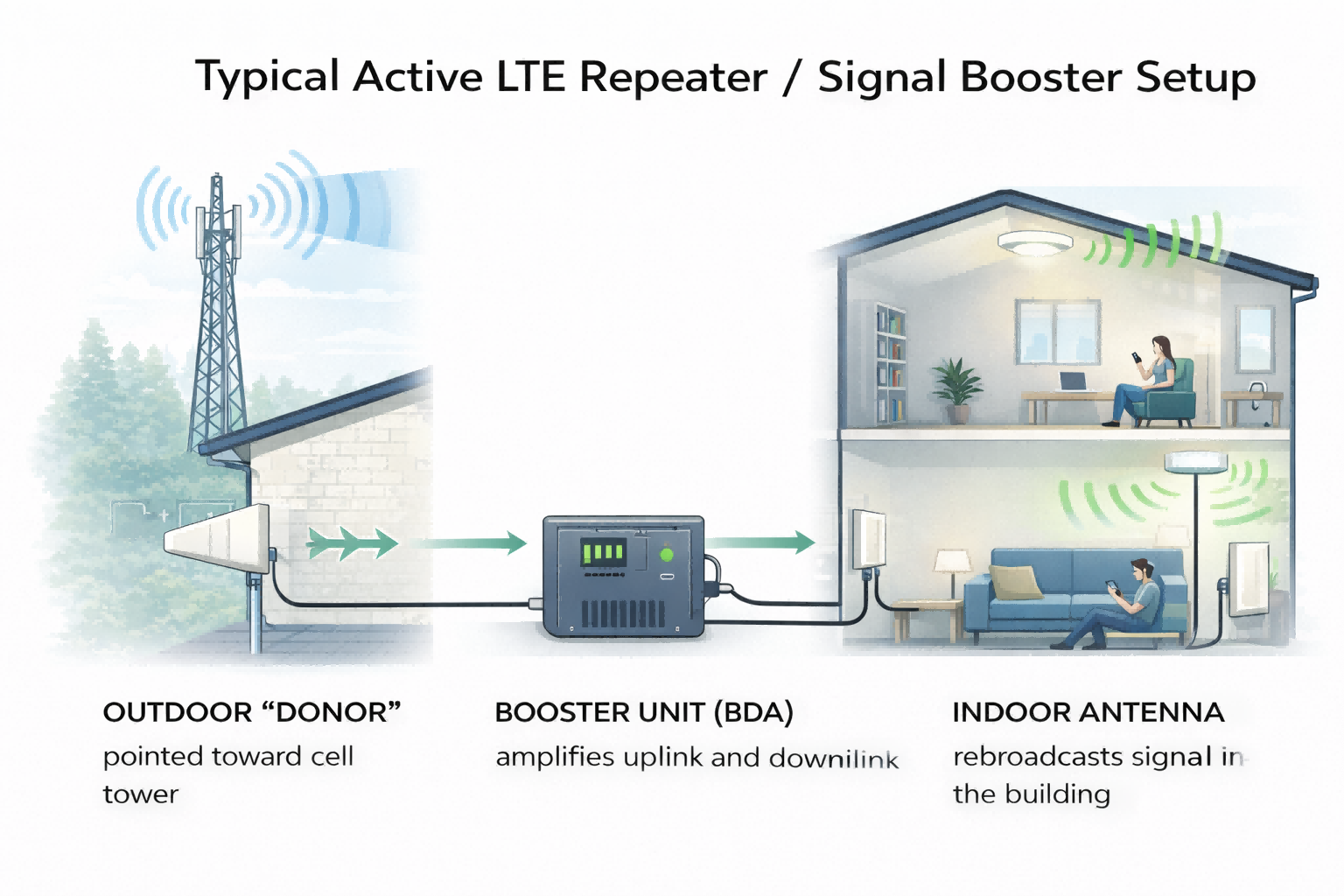
What it does:
• Raises RSRP inside the building (more bars)
• If used with a directional donor antenna, it can also improve SINR by focusing on a single tower and rejecting others
• Can make previously unusable bands strong enough for your device to connect to
What it doesn’t do:
• It doesn’t create new signal out of nowhere – it can only amplify whatever it hears on the donor antenna
• It can’t fix a completely dead area where there is essentially no signal at all
Passive Repeaters and Network Extenders
There are also passive repeater style setups:
• An outdoor antenna is hard-wired to an indoor antenna via coax
• There’s no active amplifier, just a “bridge” between outside and inside
These are simple and sometimes useful for short distances, but they’re much weaker than an active booster. They also add another “distance hop” between the indoor antenna and your phone, which costs you power again.
Some regulators and operators distinguish between:
• Cellular mobile repeaters – multi-user systems that rebroadcast RF
• Mobile phone boosters – devices connected by cable to a single handset
In some countries (for example, Australia), stand-alone “mobile phone boosters” are actually prohibited without specific approval, and even repeaters must be carrier-authorised.
Always check local rules before buying generic hardware from overseas marketplaces.
When an LTE Signal Booster Actually Helps
An LTE repeater / booster is most useful when:
• You have weak but detectable LTE signal outdoors (e.g. −100 to −115 dBm RSRP)
• You need whole-room or whole-house coverage for multiple phones and devices
• Building materials (metal siding, foil insulation, concrete) are killing indoor signal
• Your hotspot or phone doesn’t have external antenna ports, so you can’t feed it signal directly
If your outdoor signal is already strong and your main issue is data speed, a booster may not help much compared to a smarter antenna setup.
3. What People Call an “LTE Antenna Booster” (External Antennas)
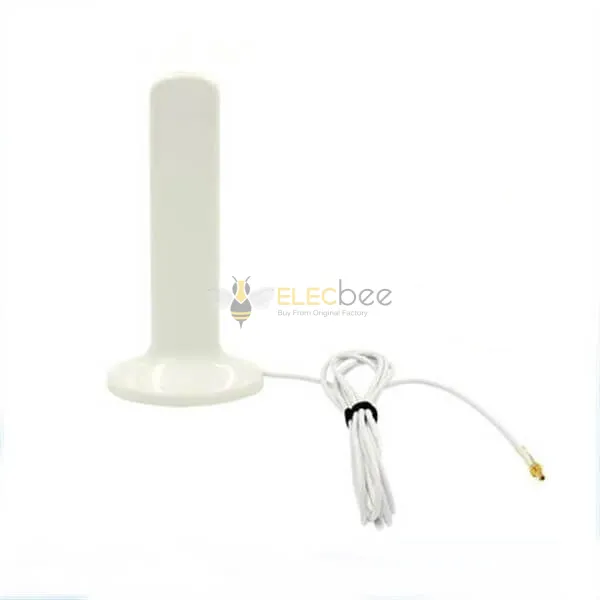
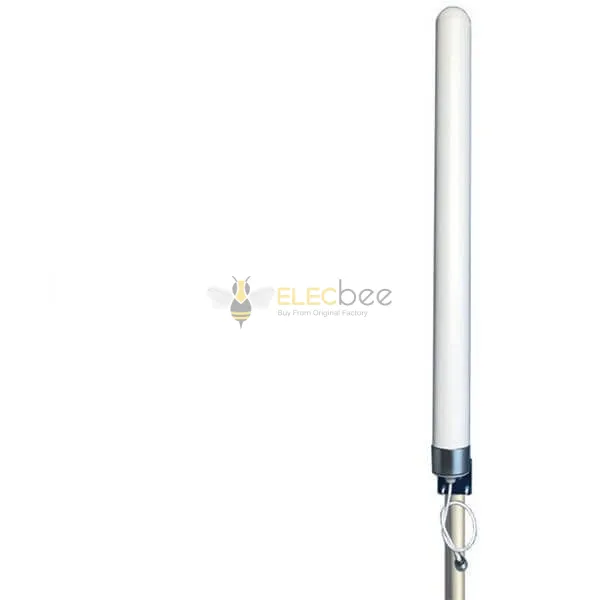
Many “LTE antenna boosters” sold online are not amplifiers at all – they are external LTE antennas, sometimes bundled with pigtail cables and adapters.
Used correctly, external antennas can dramatically improve performance without any active amplification.
External Directional vs Omnidirectional LTE Antennas
Two big families:
• Directional antennas (log-periodic, Yagi, panel, grid)
○ Focus energy in one direction → higher gain, better SINR
○ Ideal if you know where your tower is
• Omnidirectional antennas
○ Listen in all directions → lower gain, more interference
○ Better when the tower direction is changing (moving vehicles, boats) or you truly don’t know where it is
For fixed locations, experienced installers almost always recommend directional antennas, especially in low-SINR environments.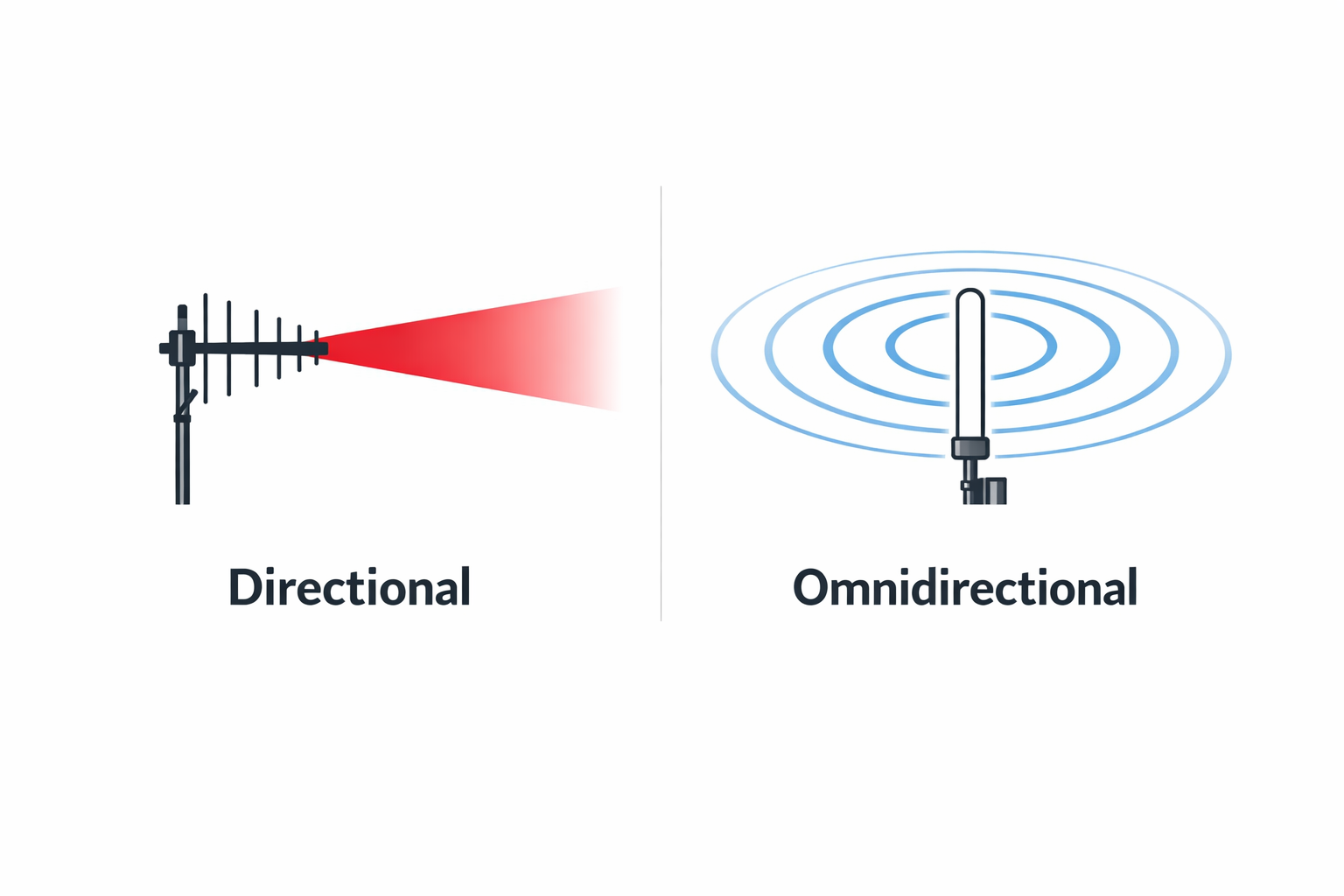
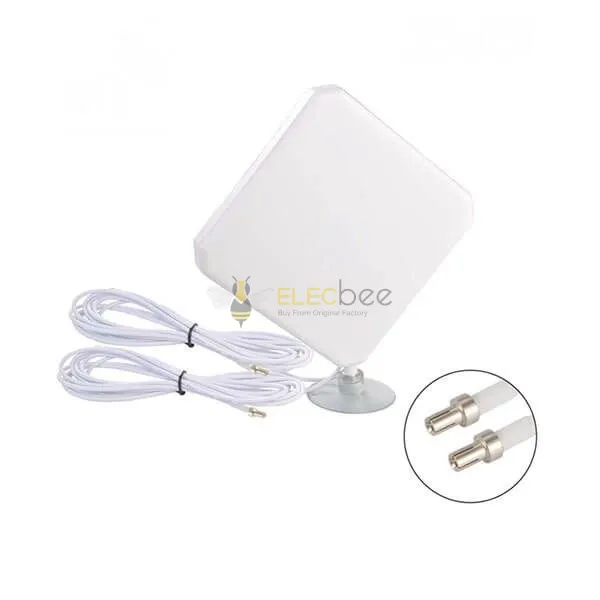
MIMO Panels for Hotspots and Routers
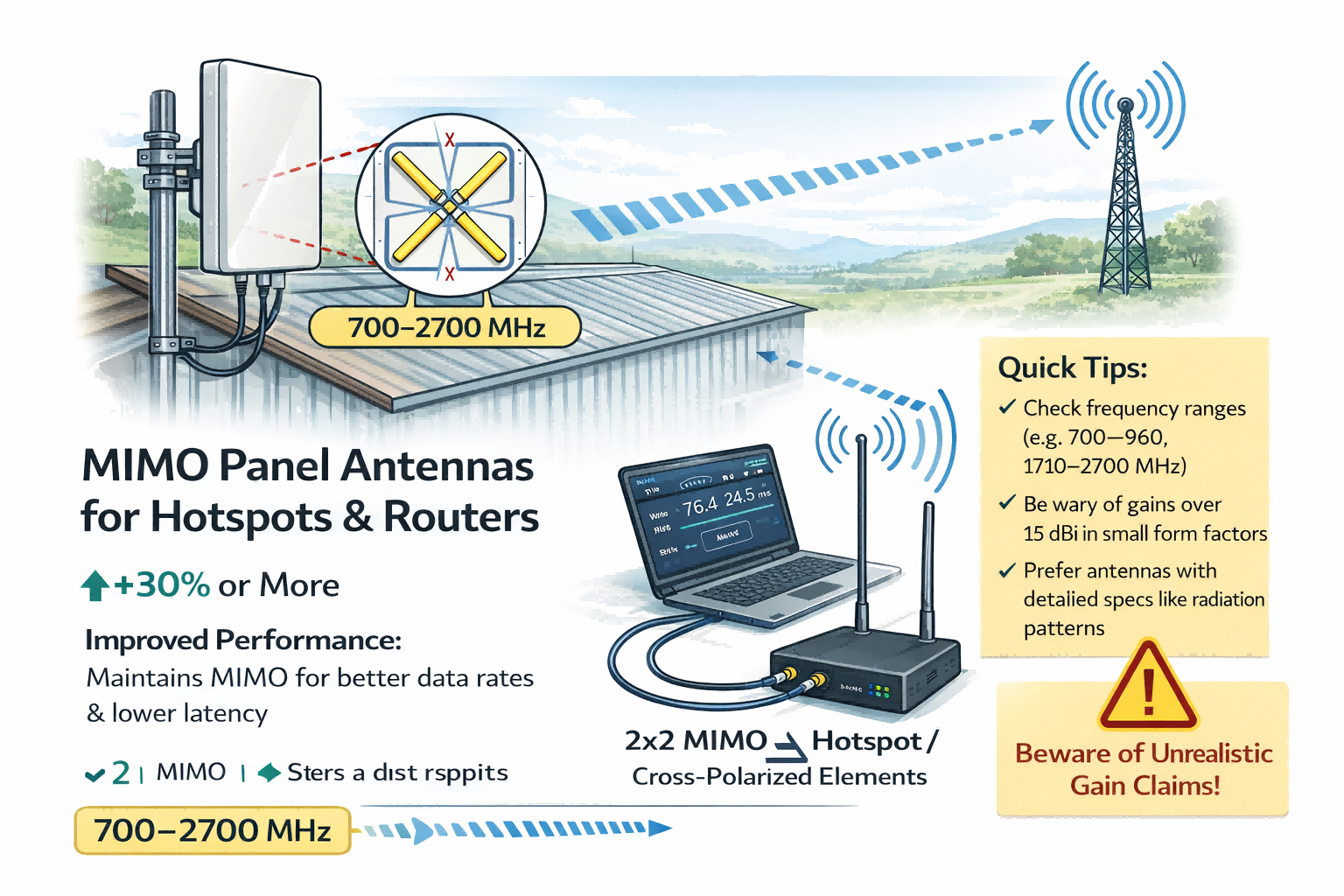
Modern LTE and 5G devices use MIMO (multiple-input, multiple-output) – typically 2×2 or 4×4. That means:
• Your hotspot or router often has two antenna ports
• Using external MIMO antennas (two cross-polarised elements) maintains MIMO and can increase data rates by 30% or more in good conditions
A common best-practice for a home LTE hotspot is:
1. Buy a decent hotspot/router with external antenna ports.
2. Mount a cross-polarised MIMO panel or dual Yagis outside.
3. Point them carefully at the best tower.
4. Skip the booster entirely if your outdoor RSRP is better than about −100 dBm.
This approach preserves full MIMO performance and avoids the complexity and cost of a booster.
Fake Antenna Gain Numbers and How to Sanity-Check Specs
One of the most common pitfalls when shopping online is fake gain claims.
• Cheap antennas on marketplaces often advertise “28 dBi” or even higher for tiny plastic panels – that’s physically unrealistic for their size and frequency range
• Realistic LTE antenna gains for compact antennas are usually in the 5–15 dBi range
Quick sanity checks:
• Look for detailed frequency ranges (e.g. 698–960 MHz, 1710–2700 MHz) instead of “for 3G/4G/5G!!!”
• Prefer brands that show radiation patterns and test reports
• Be suspicious of anything much above 15 dBi in a small indoor-friendly form factor
When in doubt, a well-designed 8–11 dBi MIMO panel aimed correctly will beat a “28 dBi” no-name omni every time.
4. LTE Repeater vs LTE Antenna Booster: Real-World Scenarios
So which is better in practice: an LTE signal booster or an external LTE MIMO antenna? The answer depends on your scenario.
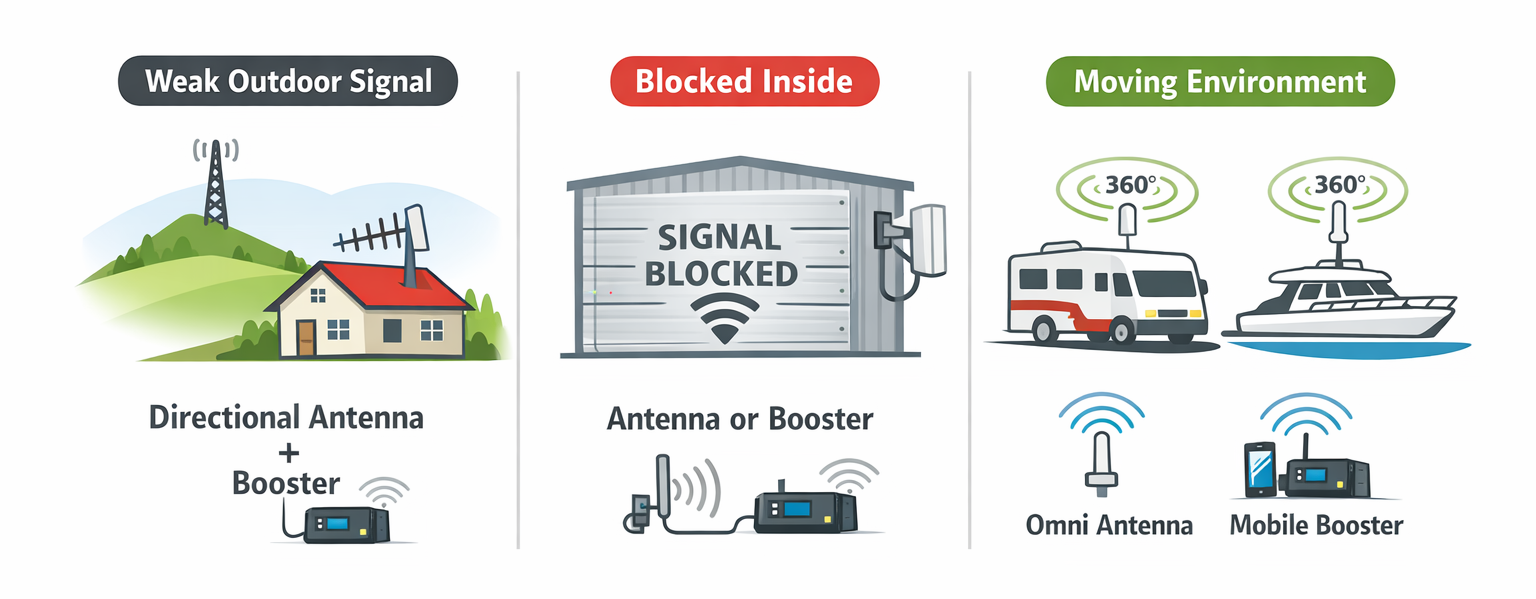
Scenario 1: Rural Home with Weak Outdoor Signal
Symptoms:
• Outside RSRP around −110 to −115 dBm, SINR close to 0 dB or negative
• Indoors almost no usable signal; calls drop, data barely loads
Best approach:
1. Measure first – walk around with your phone or hotspot in “field test” mode and capture RSRP/SINR around the building.
2. If you can find a spot outdoors where RSRP is better than about −115 dBm and SINR is at least slightly positive, mount a directional donor antenna there.
3. Use a high-gain, single-carrier LTE signal booster to feed one or more indoor antennas.
Why not just external antennas?
• If your devices don’t have external antenna ports, or you need coverage for many phones, an external antenna alone can’t feed them all.
• A properly installed booster can take marginal signal and make an otherwise unusable location workable for multiple users.
Scenario 2: Metal Building: Strong Outside, Dead Inside
Symptoms:
• On the roof or outside wall, your phone gets −85 dBm RSRP, good SINR
• Inside, especially in the middle of a metal building, you drop to −110 dBm or no service
Best approach:
You have more options here:
• If your main need is a single hotspot for data, an external MIMO antenna directly connected to the hotspot, mounted outside, may be enough.
• If you need full indoor, multi-device coverage, a booster with modest gain and a directional donor antenna on the side of the building is ideal.
Since the outdoor signal is already strong, you don’t need a massive-gain booster. You’re mostly bridging signal through the metal shell and distributing it indoors.
Scenario 3: RVs, Boats and Moving Vehicles
Symptoms:
• Signal level and tower direction change constantly
• You often sit near the edge of coverage
Best approach:
• For moving vehicles, omni antennas are more realistic, because the tower direction is always changing.
• A mobile-rated LTE booster with good uplink power can help your phone be heard by the tower when you’re right at the edge of coverage.
• For parked RVs or boats, it may be worth deploying a directional antenna on a mast and treating it like a small cabin installation.
In these mobile scenarios, you often don’t get full-room wireless coverage. The practical solution is to keep the phone or hotspot very close to the interior antenna or cradle of the booster.
5. How to Choose: A Simple Decision Tree
Instead of starting with products, start with measurements.
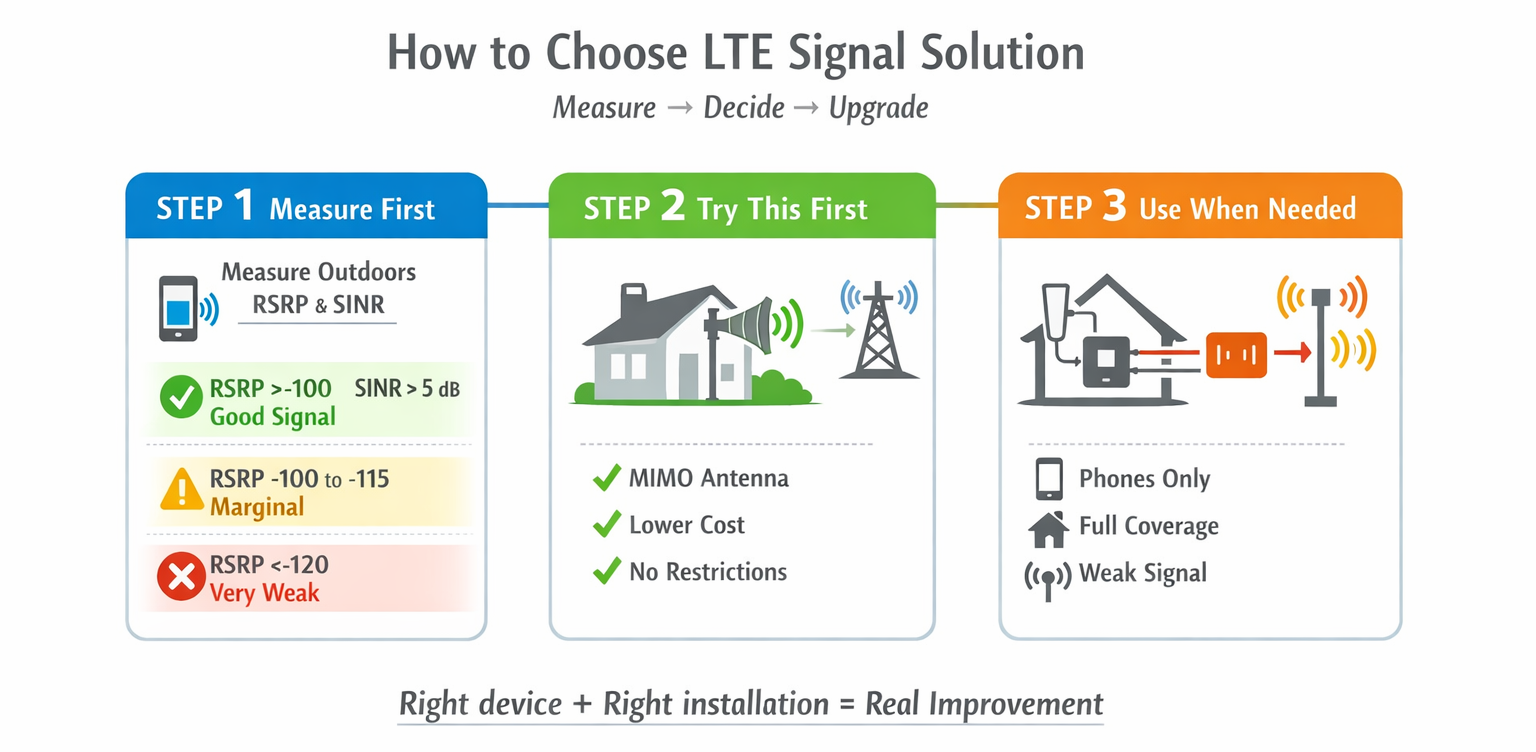
Step 1 – Measure RSRP and SINR Properly
• Use your phone’s field test mode or an Android RF measurement app.
• Walk around outside at different heights: ground, porch, roof edge.
• Note:
○ Best RSRP you can see outdoors.
○ Best SINR and which LTE band you’re on.
Rough guide:
• RSRP better than −100 dBm and SINR > 5 dB outdoors?
→ You have decent signal to work with.
• RSRP between −100 and −115 dBm, SINR around 0–5 dB
→ Marginal – external antennas plus possibly a booster.
• RSRP worse than −120 dBm almost everywhere
→ You may be truly beyond practical coverage, or need very specialist gear and professional help.
Step 2 – Try External LTE MIMO Antennas First
If you mainly need to boost one hotspot or router, and it has external antenna ports, the best first move is usually:
1. Confirm the device supports all relevant bands for your carrier.
2. Install a quality MIMO directional antenna outside, pointed at the best tower.
3. Keep cable runs short and use decent-quality coax.
Benefits:
• You keep full MIMO performance.
• You avoid potential booster configuration issues and cost.
• You won’t run into regulatory restrictions on repeaters/boosters.
This is often the sweet spot for price vs performance.
Step 3 – Add an LTE Repeater Only When It Makes Sense
Consider an LTE signal booster / repeater when:
• You cannot attach external antennas directly to your main devices (e.g. phones only).
• You need room- or building-wide LTE coverage.
• Outdoor signal is weak enough that external antennas alone are not sufficient.
Choose a booster that:
• Is approved for your region and carriers.
• Has enough gain and downlink power for the area you want to cover.
• Can work with directional donor antennas for better SINR.
In many real-world cases, the difference between “waste of money” and “life-changing upgrade” is simply choosing the right class of device and installing it correctly.
6. Installation Tips, Legal Rules and Common Mistakes
Even the right hardware can perform badly if installed incorrectly.
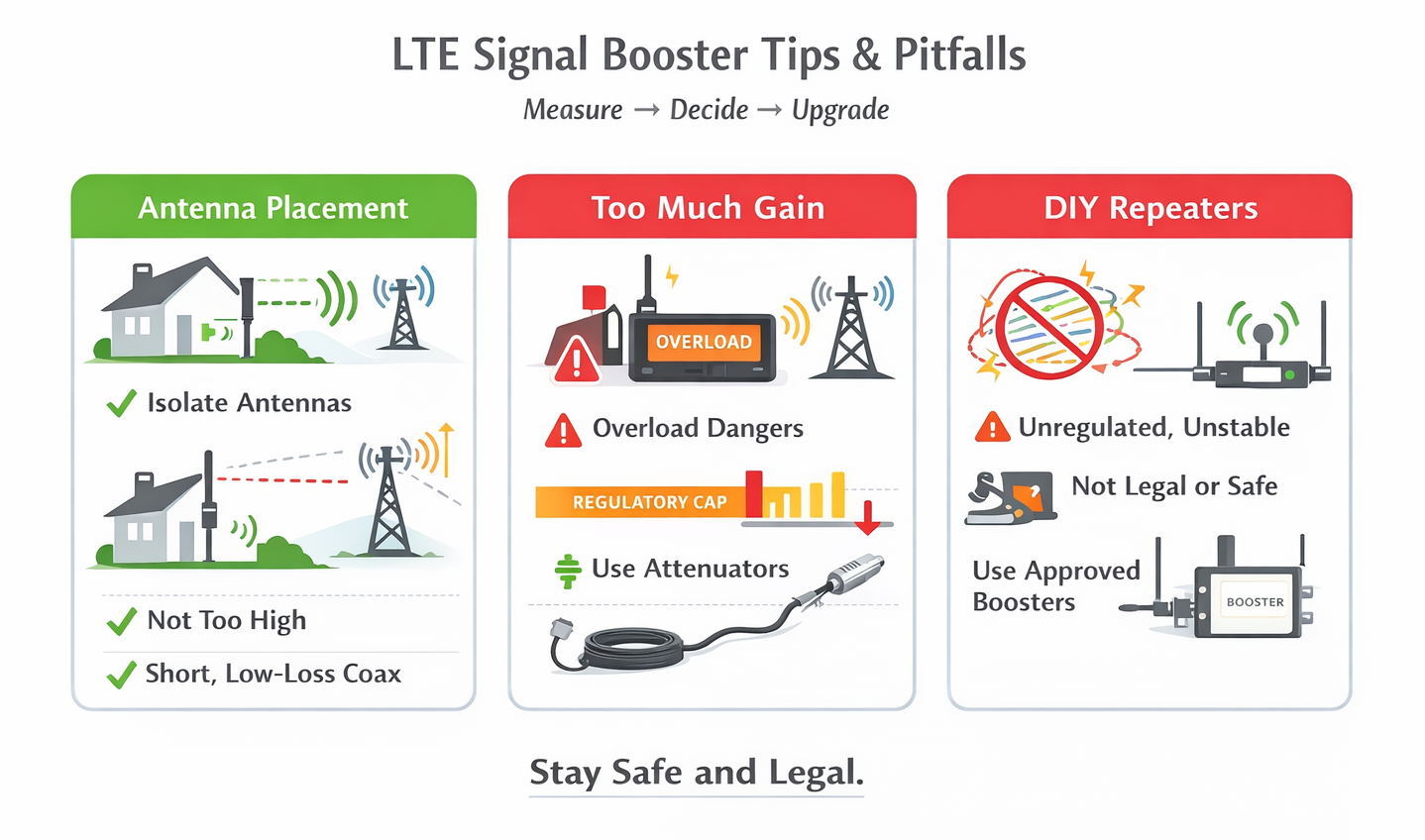
Antenna Placement, Isolation and Oscillation
Key points:
• The outdoor (donor) and indoor antennas must be well-isolated from each other. If they “hear” each other strongly, the booster will oscillate (feedback loop), causing shutdowns or noise.
• Height isn’t always better. Going too high can expose the donor antenna to more towers, hurting SINR. Sometimes mounting it on the side of the building facing the desired tower is best.
• Use short, low-loss coax runs where possible. Long, thin cables can erase the gain you just paid for.
Avoiding Overload: “Too Much Gain” Is Real
More gain is not always better:
• If your outdoor signal is already strong, an over-powered booster can overload – leading to distortion, shutdown, or even interference to the network.
• Some regulators limit maximum gain and require “network-safe” consumer boosters.
If your installer or device manual mentions “overload” or “input power too high”, you may need a lower-gain setup or attenuators.
DIY Repeaters, Regulatory Rules and When to Call a Pro
A lot of hobbyists wonder if they can “just build a repeater” using SDRs or off-the-shelf RF gear. In practice:
• Proper repeaters need careful filtering, isolation and automatic gain control to avoid oscillation and interference.
• It’s very easy to create a device that oscillates and sprays interference across multiple bands.
• In many countries, using home-built repeaters on licensed spectrum is not legal without special permission.
For most people, it’s safer (and often cheaper in total) to buy an approved booster or stick to external antennas.
7. FAQ: Do LTE Boosters Really Work?
Will a Booster Fix a Congested Tower?
No. A booster can:
• Make a weak but clean signal stronger inside your building.
• Improve SINR when paired with a good directional donor antenna.
But it cannot add capacity to an overloaded tower. If your speeds drop only at peak times while signal metrics stay the same, you’re probably hitting tower congestion, not a signal problem.
Can I Build My Own LTE Repeater from Scratch?
From a purely technical standpoint, yes — cellular repeaters are essentially specialised bi-directional amplifiers with filtering and automatic gain control.
However:
• Getting the filtering and isolation right is non-trivial.
• It’s very easy to create a device that oscillates and causes interference.
• In many countries, using home-built repeaters on licensed spectrum is not legal without special permission.
For most people, it’s safer to buy an approved booster or work with external antennas.
What About 5G – Do the Same Rules Apply?
Yes, in principle:
• 5G NR still cares about signal strength (RSRP) and quality (SINR).
• External MIMO antennas are often the first and best upgrade for fixed wireless 5G routers.
• 5G boosters are more complex, and in some regions they’re tightly regulated or not widely available yet.
The same basic logic still holds:
Measure first → improve antennas and placement → only then consider an active repeater/booster if you truly need multi-device indoor coverage.
8.Final Takeaway
If you remember nothing else from this LTE repeater vs LTE antenna booster discussion, remember this:
• For a single hotspot or router with antenna ports, a quality external LTE MIMO antenna is often the best first step.
• For whole-home coverage in a weak-signal area, a properly chosen LTE signal booster with a directional donor antenna can turn an unusable cabin or metal building into a workable internet connection.
• Don’t chase bars or impossible-looking gain numbers — chase better RSRP, better SINR, and the right hardware for your specific situation.
If you start with measurements and follow this decision tree, you’re far less likely to waste money and far more likely to end up streaming, gaming and working without constantly watching your phone search for signal.