

 0
0
If you have ever bought a DC power adapter that looked right but refused to work properly, you are not alone. Few connector types cause as much frustration as the classic barrel connector. At first glance, DC 5.5x2.1 vs 5.5x2.5 sounds like a tiny difference. In practice, that small difference can mean a loose fit, unstable power, overheating, or a device that keeps rebooting.
This is exactly why so many users keep asking the same question: what is the real difference between 5.5x2.1 and 5.5x2.5 barrel connectors, and can they be used interchangeably?
The short answer is simple: they look very similar, but they are not the same. Sometimes they appear to fit. That does not mean they are the correct match.
In this guide, we will explain the difference between 5.5x2.1 vs 5.5x2.5 barrel connector sizes, why confusion is so common, which one is more common, and how to choose the right one for your device.
1.What Are DC Barrel Connectors?
DC barrel connectors are cylindrical power connectors commonly used in low-voltage electronics. You will find them on routers, cameras, LED devices, mini PCs, development boards, battery-powered equipment, and many other products.
The size is usually written in the format outer diameter x inner diameter.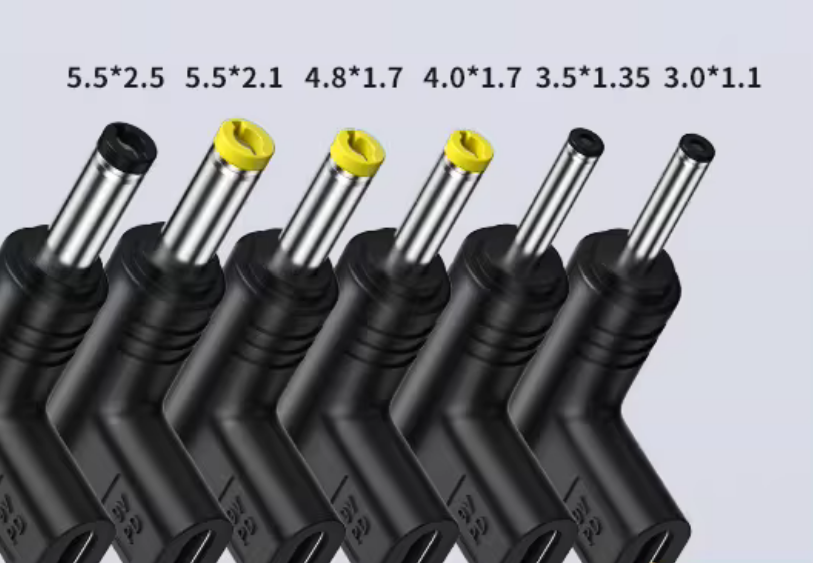
So:
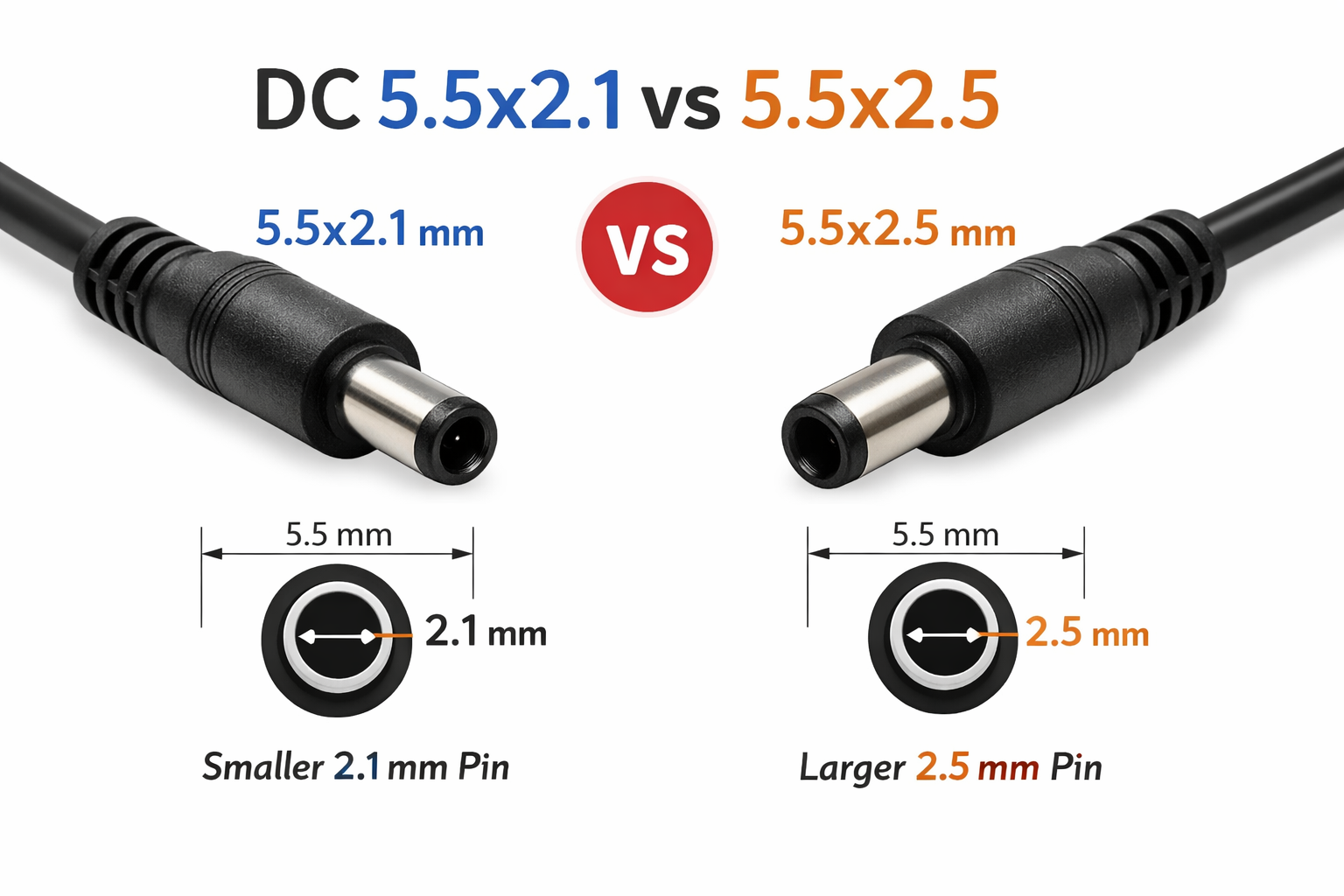
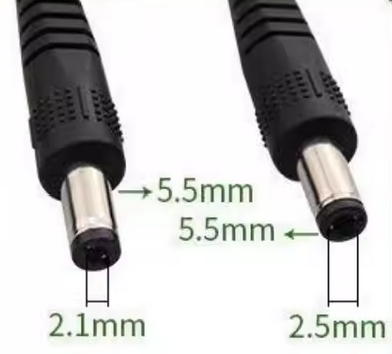
• 5.5x2.1 means 5.5 mm outer diameter and 2.1 mm inner diameter
• 5.5x2.5 means 5.5 mm outer diameter and 2.5 mm inner diameter
That means both connector types have the same outside barrel size. The key difference is the center contact size.
This is why many buyers get confused. From the outside, the two connector sizes look nearly identical. But the electrical contact inside is different, and that is what determines whether the connection is secure.
2.DC 5.5x2.1 vs 5.5x2.5: What Is the Difference?
The core difference between DC 5.5x2.1 vs DC 5.5x2.5 is the inner diameter.
A 2.1 mm inner contact is smaller than a 2.5 mm inner contact. That may sound insignificant, but at this scale it matters a lot. A difference of 0.4 mm in a connector center contact is large enough to affect fit, pressure, and electrical reliability.
Here is the practical difference:
|
Feature |
5.5x2.1 |
5.5x2.5 |
|
Outer diameter |
5.5 mm |
5.5 mm |
|
Inner diameter |
2.1 mm |
2.5 mm |
|
Appearance |
Very similar |
Very similar |
|
Typical use |
Consumer electronics, routers, cameras, many 12V devices |
Some higher-current devices, some laptops, some specialized equipment |
|
Compatibility risk |
Often confused with 2.5 mm |
Often confused with 2.1 mm |
The important thing to remember is this: matching the outer barrel is not enough. The center contact must also match.
3.Can 5.5x2.1 and 5.5x2.5 Be Used Interchangeably?
This is where most confusion begins.
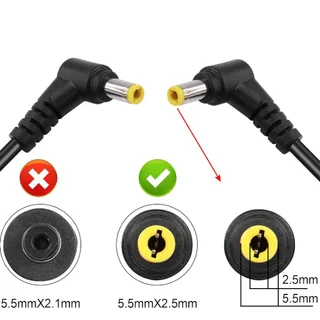
Many users report that a mismatched plug “sort of works.” Others say it does not fit at all. Both experiences can be true, because real-world results depend on connector tolerances, spring design, wear, manufacturing quality, and current demand.
Why some mismatched plugs seem to work
Some barrel connectors are more forgiving than others. In certain devices, the contact structure allows a slightly mismatched plug to make partial contact. This is why some users find that a 2.1 mm plug works in a 2.5 mm jack, or that a certain cable works on one device but not on another.
However, “works” is not the same as “correct.”
A connector that seems fine during a quick bench test may still fail when:
• the cable moves
• the device draws more current
• the connector warms up
• the equipment runs for a long time
• vibration or handling changes the contact pressure
The real risk of interchangeability
The biggest problem is poor electrical contact. That can lead to:
• intermittent disconnects
• random device shutdowns
• voltage drop
• increased resistance
• heating at the connector
• charging instability
• unexpected reboots
This is why the safest rule is simple:
Do not treat 5.5x2.1 and 5.5x2.5 as interchangeable, even if one combination appears to fit.
A loose or partial connection is especially risky in devices with higher current draw, mobile use, field use, or sensitive electronics.
4.Which One Is More Common?
If you search online, you will quickly see why this topic is so frustrating: there is no true universal standard across all manufacturers.
That said, the two most commonly encountered sizes are indeed:
• 5.5x2.1
• 5.5x2.5
In many general electronics applications, 5.5x2.1 is often seen as the more common size. It frequently appears on:
• routers
• CCTV cameras
• LED strips
• Arduino-compatible accessories
• various 12V consumer electronics
• some mini PCs and embedded devices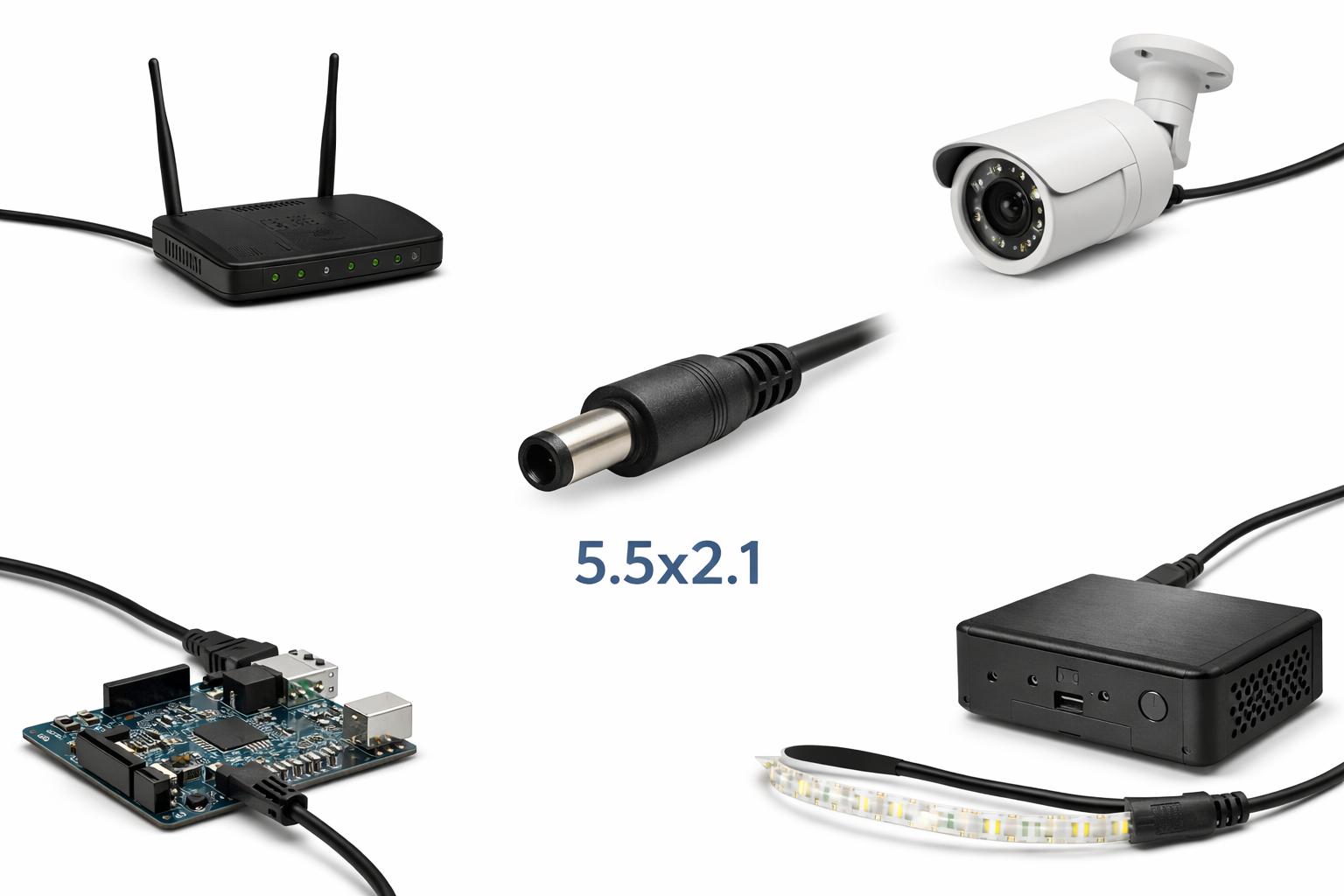
Meanwhile, 5.5x2.1 is also widely used, especially on:
• certain laptops
• some higher-current adapters
• specialized industrial or audio gear
• selected branded power systems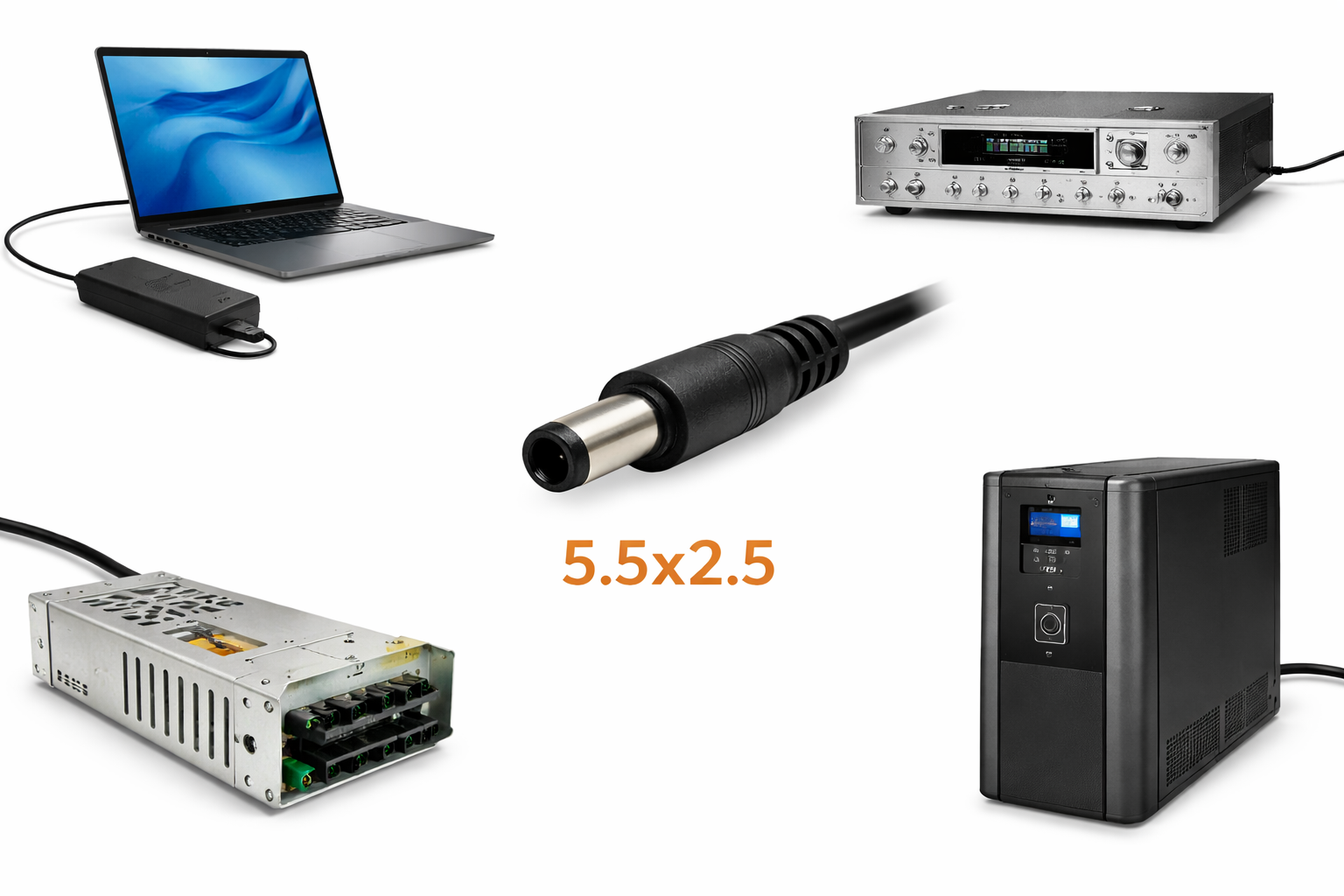
A useful rule of thumb is that 5.5x2.1 is very common in general low-voltage electronics, while 5.5x2.5 appears often in equipment that expects a larger center contact or higher current handling. But this is only a rule of thumb, not a universal law.
That is why you should never buy based on guesswork alone.
Why Is There Still No Universal Standard?
This is one of the most common complaints from engineers, hobbyists, and technicians. Barrel connectors are old, durable, cheap, and easy to use. They are also frustratingly inconsistent.
Different manufacturers made different choices over the years. Some stayed consistent within their own product lines. Others changed sizes across generations. Some even published confusing or inconsistent specifications.
As a result, the market ended up with multiple similar-looking but not fully compatible connector sizes. That is why so many users still need to measure connectors manually, compare datasheets, or buy adapter sets just to test what fits.
In other words, the lack of standardization is not your imagination. It is a real and ongoing issue.
5.How to Identify the Correct Barrel Connector Size
If you want to avoid mistakes, follow this process.
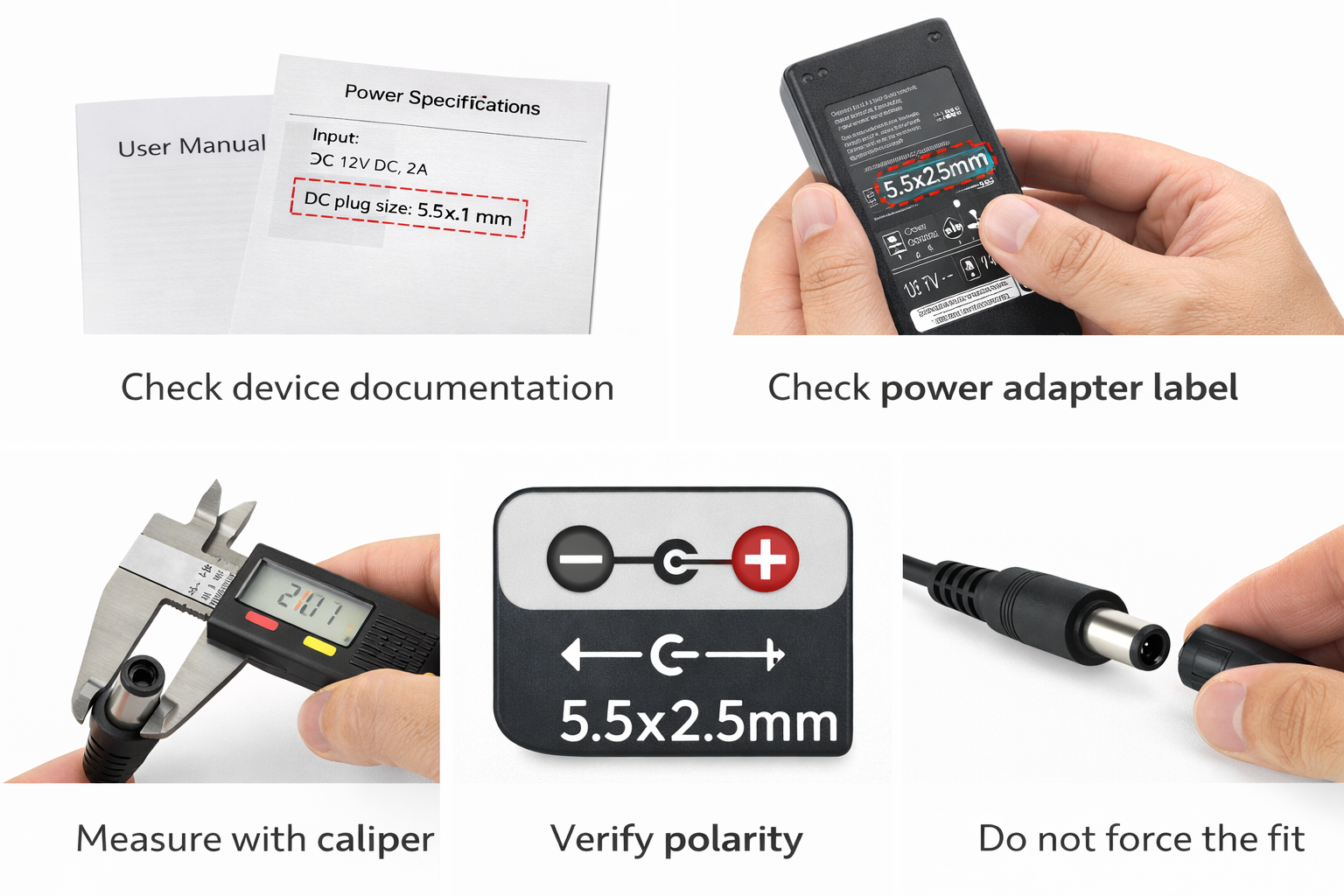
5.1. Check the device documentation
The best source is always the device datasheet, user manual, or official power specification. Look for the exact connector size, not just the voltage and current rating.
5.2. Check the power adapter label
Some adapters list the barrel size. Others only list voltage, current, and polarity, so do not assume the connector size is obvious.
5.3. Measure with a caliper
If documentation is unclear, use a caliper to measure:
• the outer diameter of the plug
• the center pin or inner bore size
This is one of the most reliable ways to distinguish 2.1 mm vs 2.5 mm DC barrel connector sizes.
5.4. Verify polarity
Even if the barrel size is correct, you still need to confirm polarity. Center positive is very common, but not universal.
5.5. Do not force the fit
If a connector needs force, feels loose, or only works when positioned a certain way, stop using it. That is a strong sign it is the wrong size or a poor-quality part.
6.What Happens If You Use the Wrong Barrel Connector?
Using the wrong connector size does not always fail dramatically. Sometimes the problems are subtle at first.
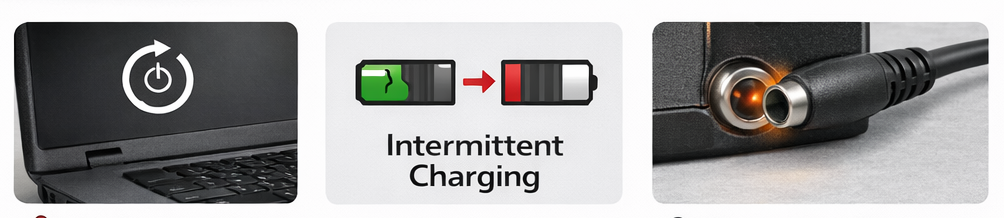
Common symptoms of the wrong barrel connector size include:
• power cuts when the cable is moved
• the device turning off under load
• charging that starts and stops
• the connector feeling warm
• unstable voltage
• rebooting during peak current draw
• long-term wear on the jack
This is why many troubleshooting threads start with the same complaint: “It works sometimes, but only if I hold the cable a certain way.”
That is usually not a power supply problem alone. It is often a connector mismatch problem.
7.Buying Tips: How to Avoid Costly Mistakes
When buying replacement plugs, jacks, or adapters, follow these best practices:
• choose suppliers that clearly specify 5.5x2.1 or 5.5x2.5
• prefer parts with datasheets and dimensional drawings
• avoid vague listings that only say “barrel connector”
• check both connector size and polarity
• consider keeping both 2.1 mm and 2.5 mm test adapters in your toolkit
• use reputable component distributors when possible
This matters even more for custom cable assemblies, repair work, field equipment, and products that draw meaningful current.
8.FAQ: DC 5.5x2.1 vs 5.5x2.5
Can 5.5x2.1 fit 5.5x2.5?
Sometimes, yes. But even if it physically inserts, the connection may be loose or electrically unreliable. It is not best practice.
Can 5.5x2.5 fit 5.5x2.1?
Usually not correctly. In some cases it may appear to insert or partially engage, but the center contact can be poor, unsafe, or inconsistent.
Which is more common, 5.5x2.1 or 5.5x2.5?
For many general electronics products, 5.5x2.1 is very common. However, 5.5x2.5 is also widely used in certain devices and power systems. There is no single universal default.
Is center positive always standard?
No. Center positive is common, but you should always verify polarity before connecting power.
How to tell 2.1 mm vs 2.5 mm barrel connector sizes?
The safest methods are checking the datasheet or measuring the connector with a caliper.
9.Conclusion
When comparing DC 5.5x2.1 vs 5.5x2.5, the difference looks small on paper but matters a lot in real use. These two barrel connector sizes share the same outer diameter, but the inner contact size changes how securely the plug fits and how reliably power is delivered.
That is why the best answer is not “they are basically the same.” The better answer is this:
They are similar in appearance, but not truly interchangeable.
If you want stable power, safe operation, and fewer troubleshooting headaches, always match the exact connector size, check polarity, and avoid assuming that a plug that “kind of fits” is good enough.
For electronics projects, repairs, and product selection, that small detail can save you a lot of time, money, and frustration.