

 0
0
Electrical connector housing material directly affects durability, corrosion resistance, and performance in different environments.
Whether you are designing industrial machinery, automotive wiring, or outdoor equipment, choosing the right connector housing is essential for long-term reliability and safety.
1.Why Connector Housing Material Matters
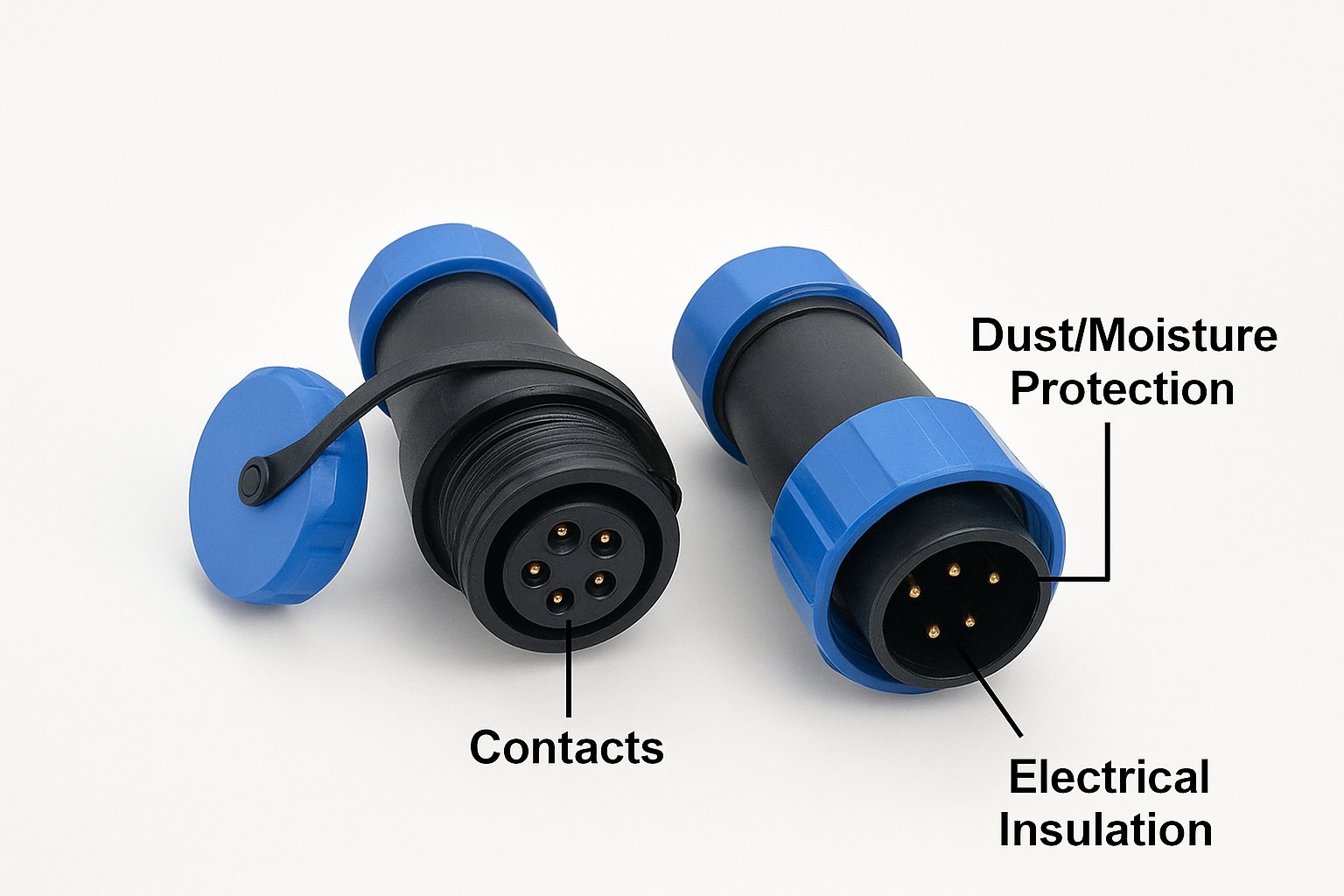
Connector housings provide:
• Mechanical protection for contacts
• Shielding and electrical insulation
• Environmental protection against dust, moisture, and chemicals
• Resistance to corrosion and impact
Material selection impacts IP rating, temperature range, chemical exposure performance, and cost.
2.Plastic Connector Housings: Types, Pros & Applications
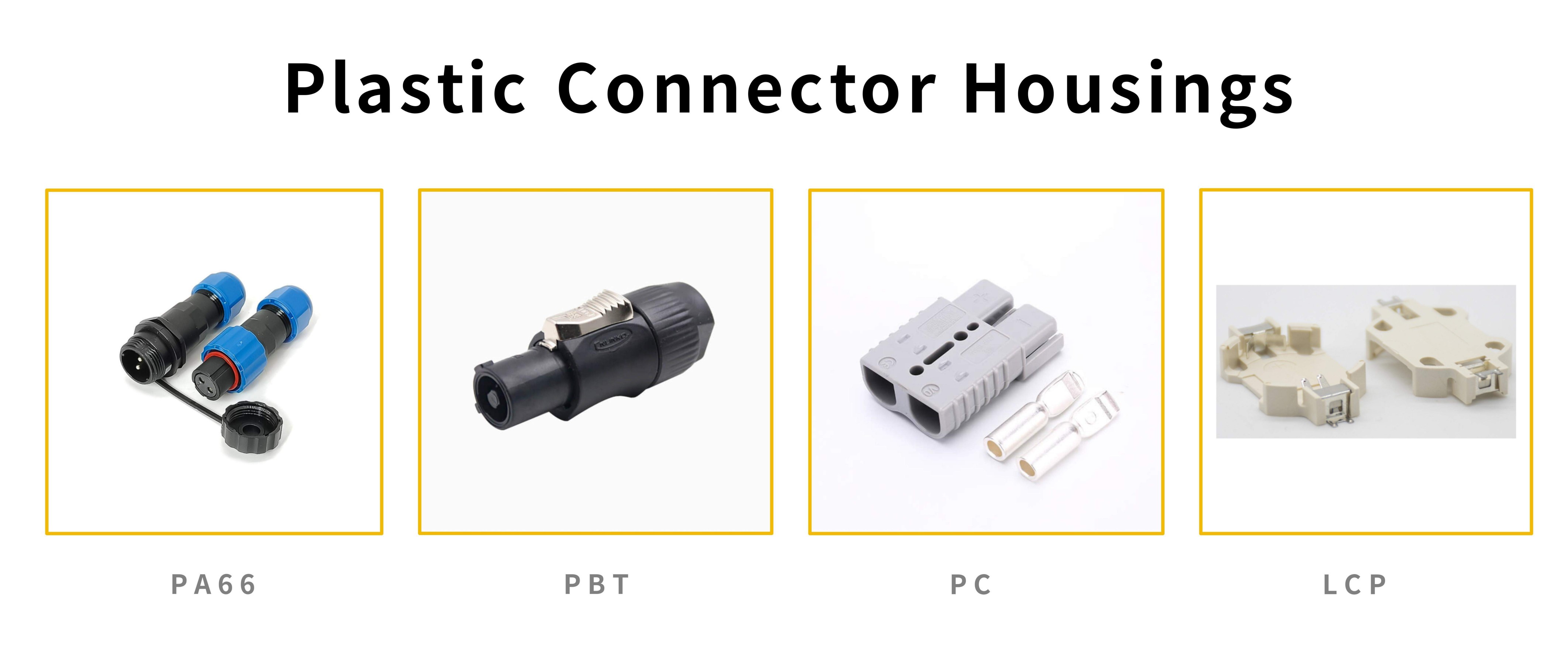
Common plastics for connector shells:
• PA66 (Nylon): Strong, impact-resistant, heat-resistant
• PBT: Good electrical insulation, UV-resistant
• PC: Transparent, high toughness
• LCP: High-temperature, high-precision molding
Advantages
• Lightweight
• Cost-effective
• Excellent insulation
• Good for consumer and light-industrial electronics
Best for
Indoor equipment, communication devices, drones, consumer electronics
Tip: Look for UL94-V0 flame-retardant plastics for industrial and safety-critical applications.
3.Metal Connector Housings: Types, Pros & Applications
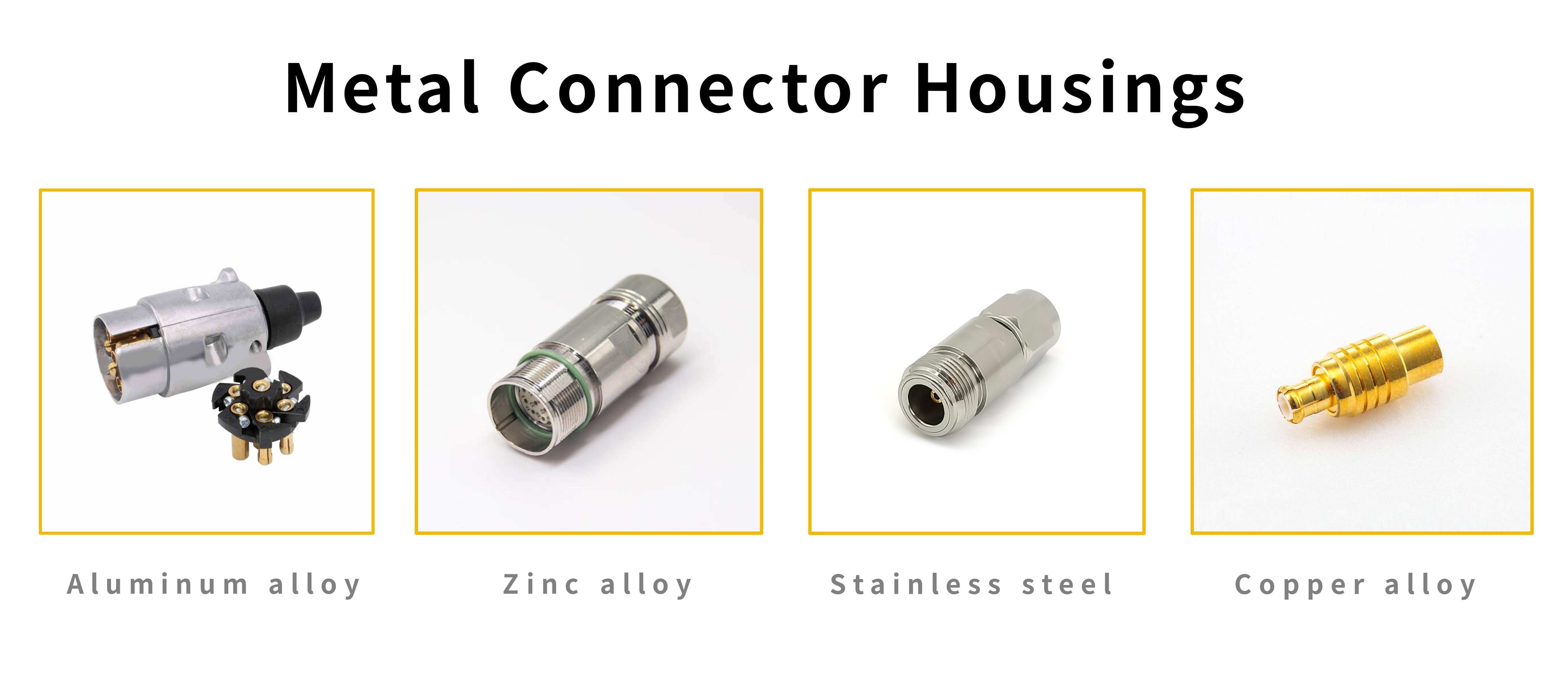
Common metals:
• Aluminum alloy: Lightweight, strong, corrosion-resistant
• Zinc alloy: Economical, strong, good EMI shielding
• Stainless steel: Excellent corrosion resistance for harsh environments
• Brass/Copper alloy: High strength and electrical conductivity
Advantages
• Superior mechanical strength
• EMI/RFI shielding
• Better corrosion resistance
• Ideal for heavy-duty & outdoor environments
Best for
Industrial automation, automotive systems, marine equipment, aerospace
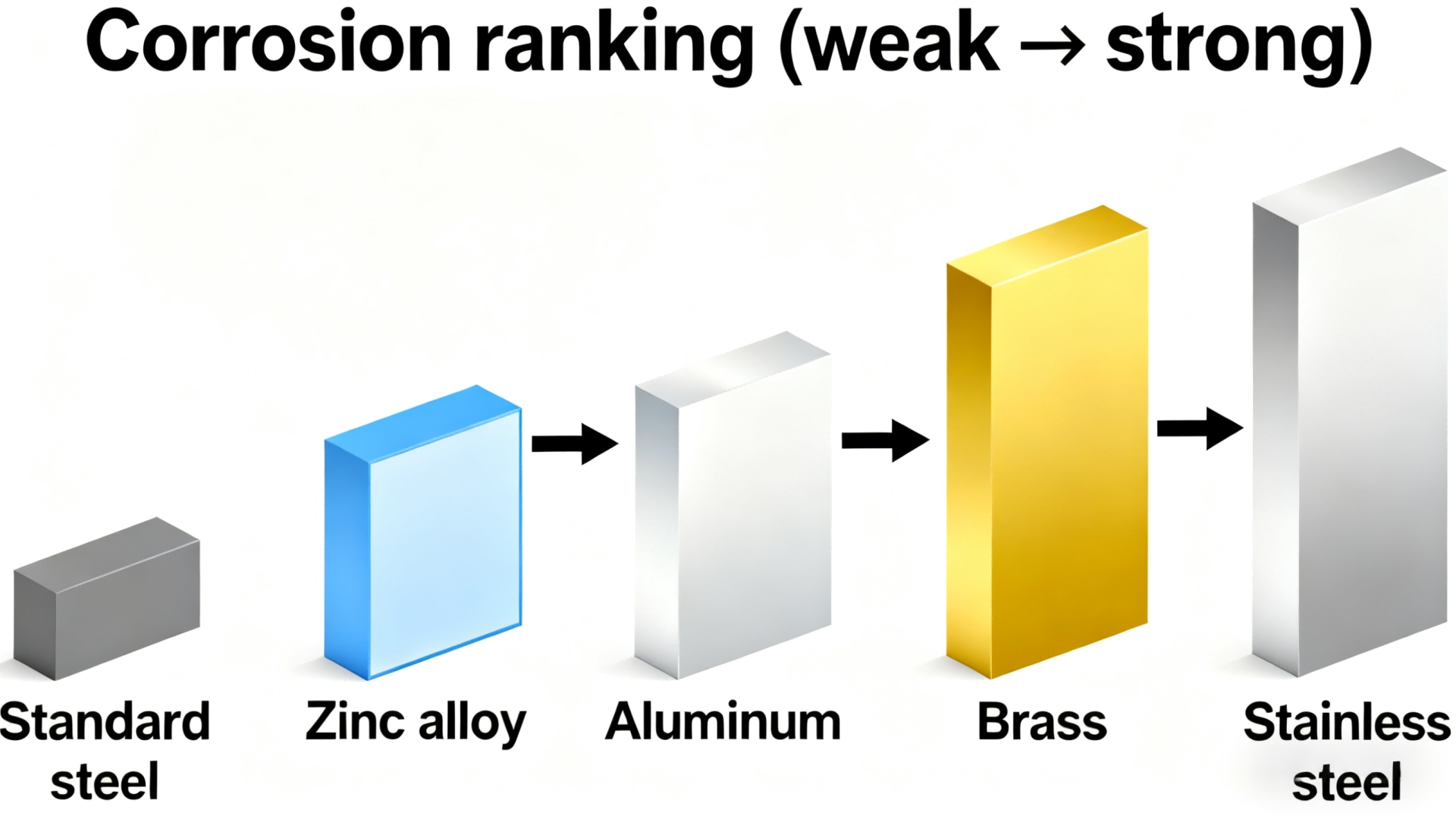
4.Corrosion ranking (strong → weak)
Stainless steel > Brass > Aluminum > Zinc alloy > Standard steel
5.Key Factors When Selecting Connector Housing
|
Criteria |
Plastic Housing |
Metal Housing |
|
Weight |
Lighter |
Heavier |
|
Strength |
Medium |
High |
|
Corrosion Resistance |
Good |
Excellent (stainless best) |
|
EMI Shielding |
None |
Strong |
|
Cost |
Lower |
Higher |
|
Typical Use |
Consumer / Light industrial |
Harsh industrial / Automotive |
Additional considerations:
• IP Rating (IP67/IP68 for outdoor) — per IEC 60529
• Salt spray resistance — per ASTM B117
• Operating temperature
• Chemical environment
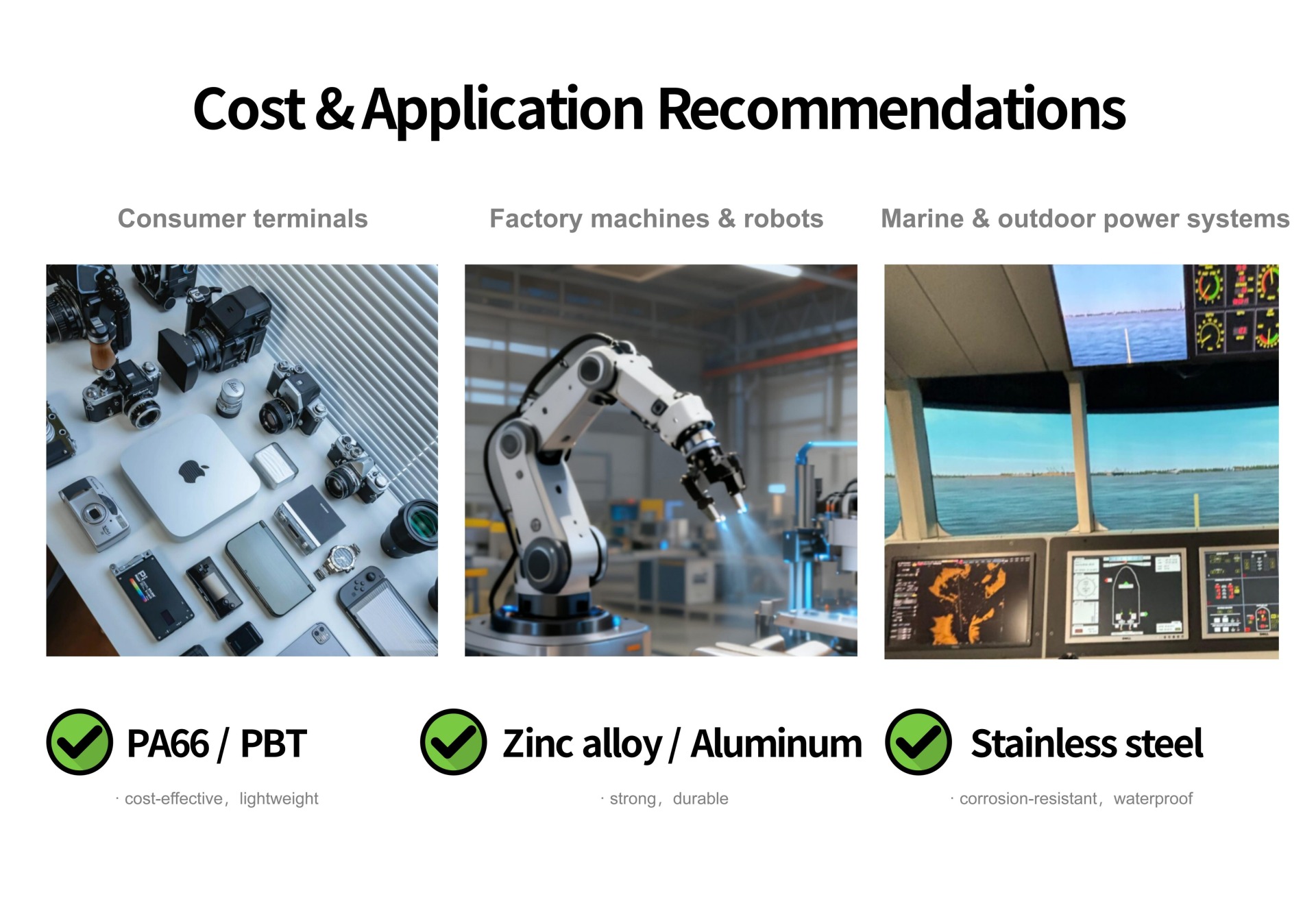
6.Cost & Application Recommendations
• Consumer terminals → PA66/PBT
• Factory machines & robots → Zinc alloy / Aluminum
• Marine & outdoor power systems → Stainless steel
7.FAQ: Connector Housing Material Selection
Q: Plastic vs metal — which lasts longer?
Metal offers higher durability in harsh environments; plastics are ideal for lightweight, insulated applications.
Q: Which material for high-corrosion areas?
Stainless steel or nickel-plated brass.
Q: How to choose for outdoor use?
Select metal housing with IP67+ rating and salt-spray certification.
8.Conclusion
Choosing the correct connector housing ensures safe, reliable performance. Start by evaluating environment, strength needs, shielding requirements, and budget.
For OEM-grade electrical connectors, explore certified connector kits and industrial shell options to match your application needs. Contact us for technical recommendations.