

 0
0
CEE plugs are widely used in industrial power, workshop equipment, temporary power distribution, outdoor installations, camping power and EV charging. At first glance, they may look simple: a round plug in blue, red or yellow, with a certain number of pins. In real applications, however, choosing the right CEE plug or socket requires more than checking the color or counting the pins.
A suitable CEE plug must match the printed voltage rating, current rating, pole configuration, earth contact position, IP protection level and installation environment. Color is a useful visual clue, but it is not the only selection rule. The final choice should always be based on the actual product marking and the electrical system.
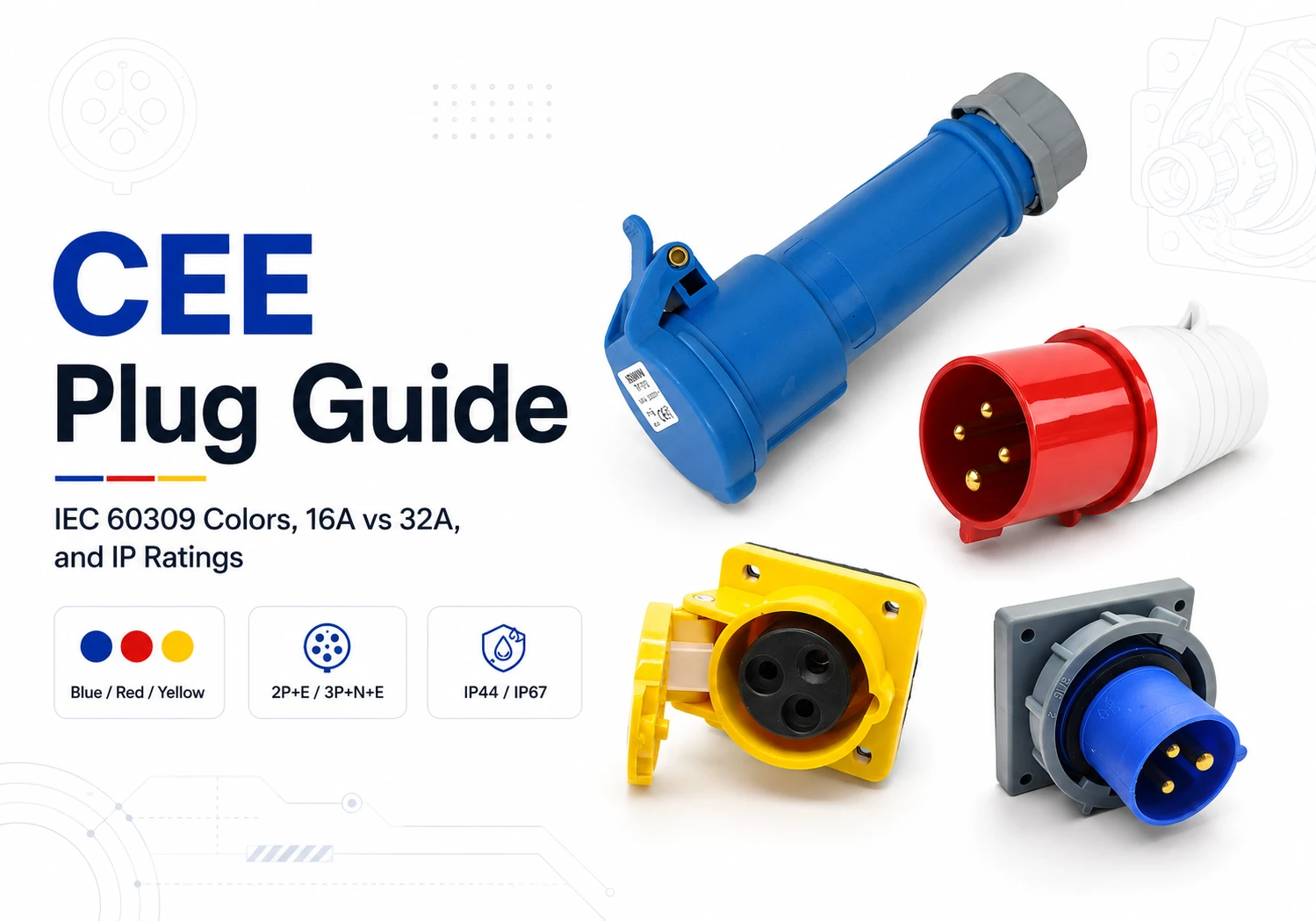
This guide explains the key points behind IEC 60309 and CEE industrial plugs, including color codes, 16A vs 32A ratings, 2P+E / 3P+E / 3P+N+E pin configurations, earth hour position and IP44 vs IP67 protection. It is designed to help engineers, buyers and equipment users make safer and more practical connector choices.
1. What Is a CEE Plug?
CEE Plug vs IEC 60309 Plug
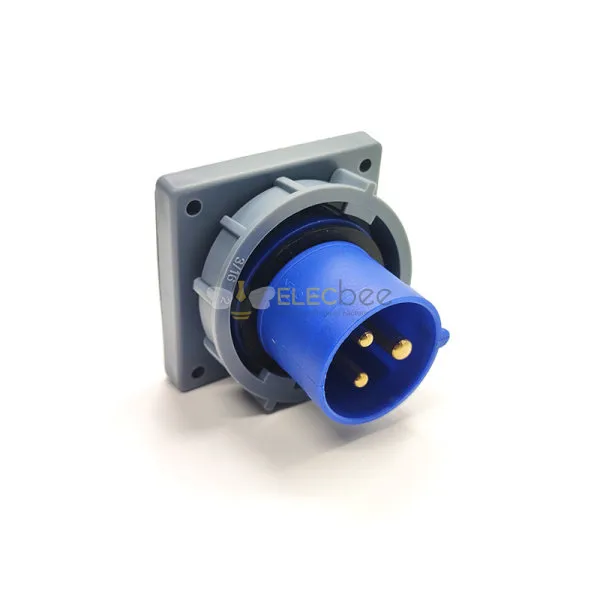
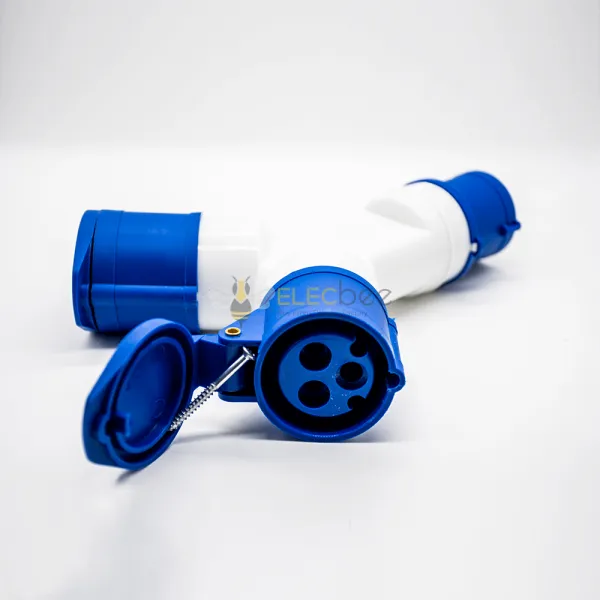
A CEE plug usually refers to an industrial plug or socket based on the IEC 60309 connector system. In different markets and industries, you may also see names such as IEC 60309 plug, CEEform plug, Commando plug, pin and sleeve connector or industrial power connector. These terms are often used for the same family of heavy-duty round power connectors.
Compared with domestic plugs, CEE industrial plugs are designed for more demanding power connections. They are commonly used where the connection needs to be mechanically strong, clearly rated and suitable for repeated use in workshops, factories, temporary power systems, outdoor power boxes, generators, EV charging adapters and construction sites.
Why Users Often Search by Appearance
Many people do not know the technical name of the connector. They may search for “blue round plug,” “red 5 pin plug,” “yellow site plug,” “what type of plug is this,” or “industrial socket with pins.” This makes CEE a strong topic for an identification and selection guide. A useful article should not only define the connector, but also help readers understand what the color, current rating, pin layout, earth position and IP rating mean.
Common CEE Applications
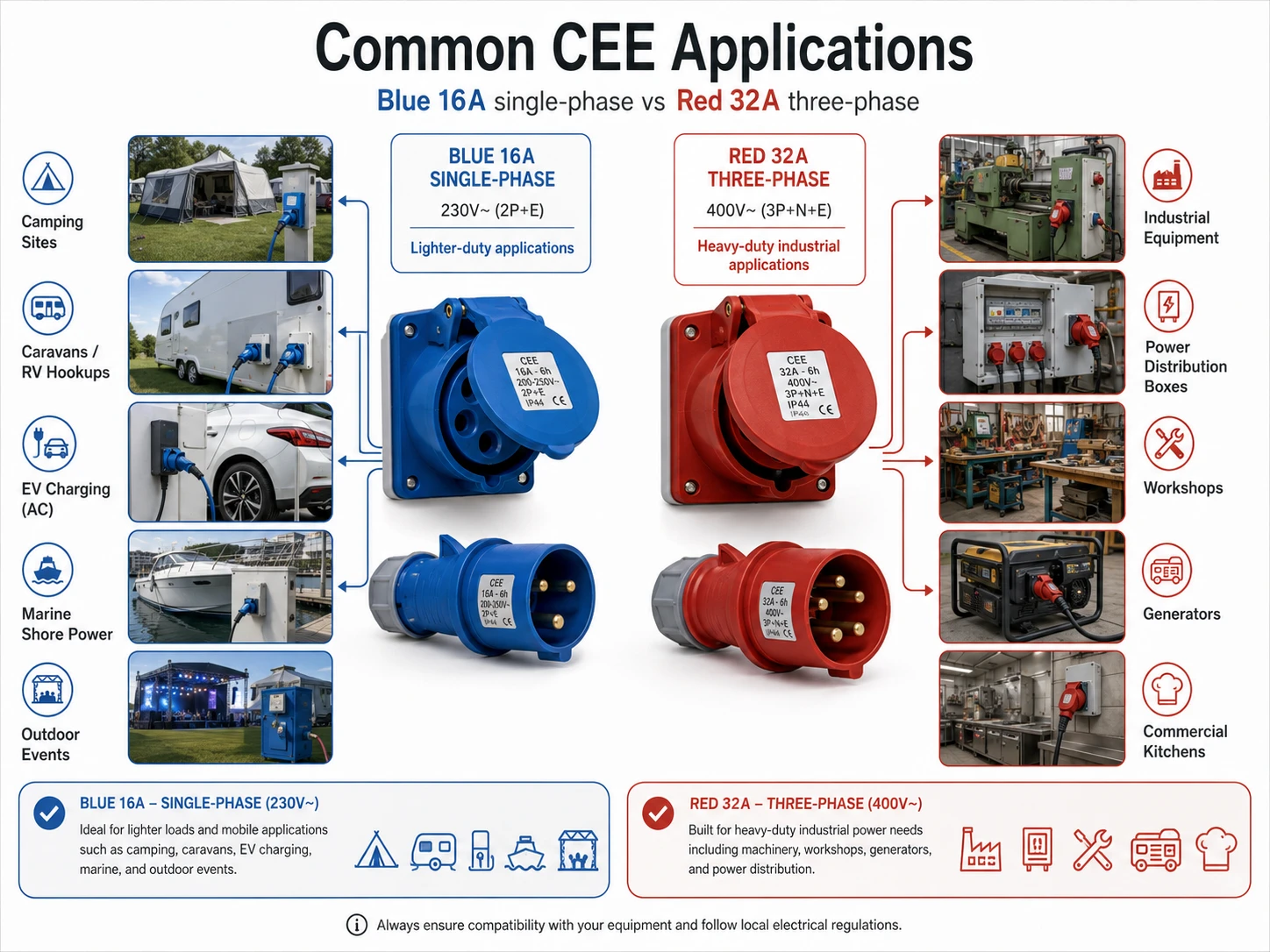
CEE plugs and sockets are commonly found in industrial equipment, power distribution boxes, workshops, generators, camping sites, caravans, marine shore power, outdoor events, commercial kitchens and EV charging setups. A blue 16A CEE socket for 230V single-phase power is very different from a red 4-pin CEE connector for three-phase power. A red 5-pin CEE connector may also be marked 220–415V or 230/400V because it includes both phase-to-neutral and phase-to-phase voltage references.
2. Why Choose a CEE Plug Instead of a Schuko Socket?
Continuous Load Is the Real Problem
One common reason users consider CEE plugs is continuous load. A household socket such as Schuko may be protected by a 16A breaker, but that does not mean every old socket, worn contact or long extension cable is suitable for hours of high current draw. Heat can build up at weak contact points, especially when the socket is old, loose, corroded or used near its limit for a long time.
This is why CEE plugs often come up in discussions about EV charging, kilns, heaters and workshop equipment. A blue CEE 16A plug is generally a more robust choice for continuous single-phase loads than a worn household socket, provided the circuit, cable size and protection devices are correctly selected.
CEE Is Not a Shortcut Around Proper Wiring
A stronger connector alone does not make an installation safe. The cable cross-section, cable length, breaker, RCD protection, earthing and local electrical regulations still matter. If the cable is too thin or the circuit is not correctly protected, changing the plug type will not solve the underlying risk.
When a Dedicated Wallbox or Fixed Wiring May Be Better
For EV charging or fixed high-power equipment, a CEE socket may be a practical solution in some cases, especially when portability is useful. However, if the load is permanent, high current or three-phase, a dedicated wallbox or hardwired installation may be more suitable. For fixed installations, outdoor sockets or three-phase systems, a qualified electrician should verify the complete setup.
3. CEE Plug Color Code: Blue vs Red vs Yellow
CEE plug color is one of the fastest ways to identify the common voltage class, but color alone is not enough for final selection. You still need to check the printed voltage, current rating, pole configuration and earth contact position on the actual product.
| CEE Color | Typical Voltage Marking / Clue | Common Meaning | Typical Applications |
|---|---|---|---|
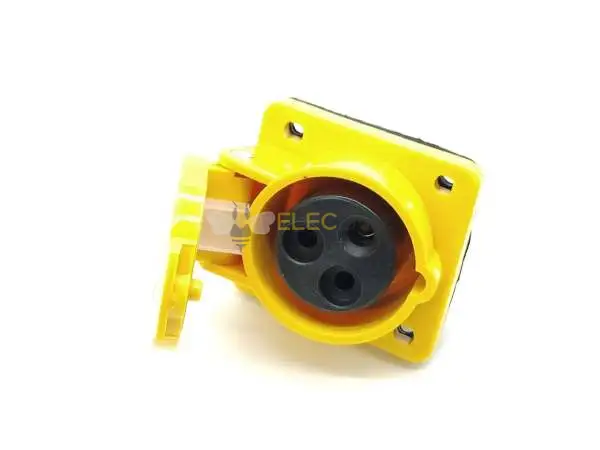
| Yellow CEE | Commonly 100–130V | Low-voltage site power | UK construction sites, temporary tools, site transformers |
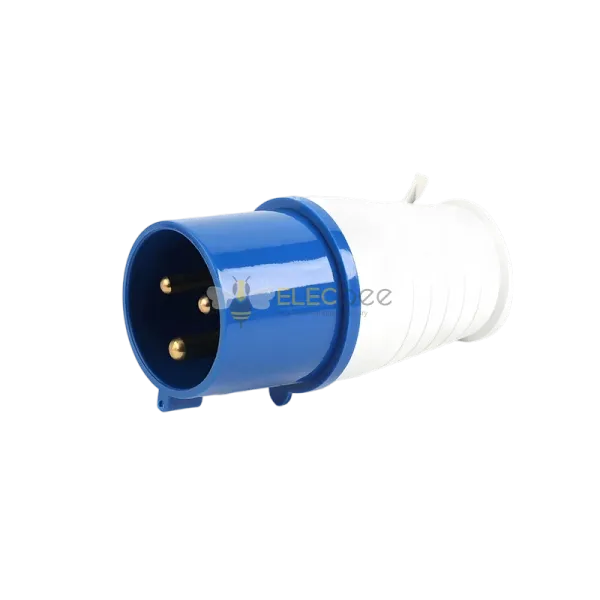
| Blue CEE | Commonly 200–250V | Often single-phase power in many markets | Camping, caravan power, EV charging, outdoor equipment |
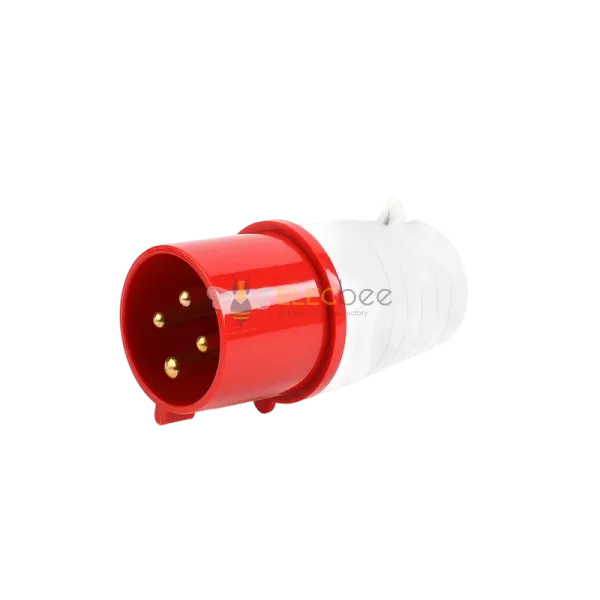
| Red CEE | Often 380–415V / 380–480V; 5-pin 3P+N+E may be marked 220–415V or 230/400V |
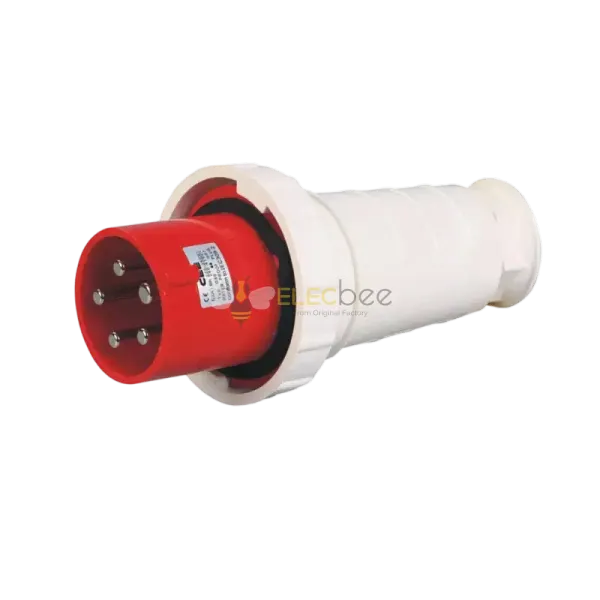
Usually three-phase industrial power | Factories, workshops, machinery, three-phase power distribution |
These color ranges are practical identification clues, not a replacement for the actual product marking. Some pole configurations and earth clock positions may use more specific voltage markings, so always check the printed voltage, current rating, pole configuration and matching socket before selection.
In simple terms, color usually gives a quick clue about the voltage class, while the number of pins tells you the pole configuration, such as 2P+E, 3P+E or 3P+N+E. A correct selection should consider both. For example, a red 4-pin CEE connector may be marked 380–415V for a three-phase system without neutral, while a red 5-pin 3P+N+E connector may be marked 220–415V or 230/400V because it includes neutral and can represent both phase-to-neutral and phase-to-phase voltage references.
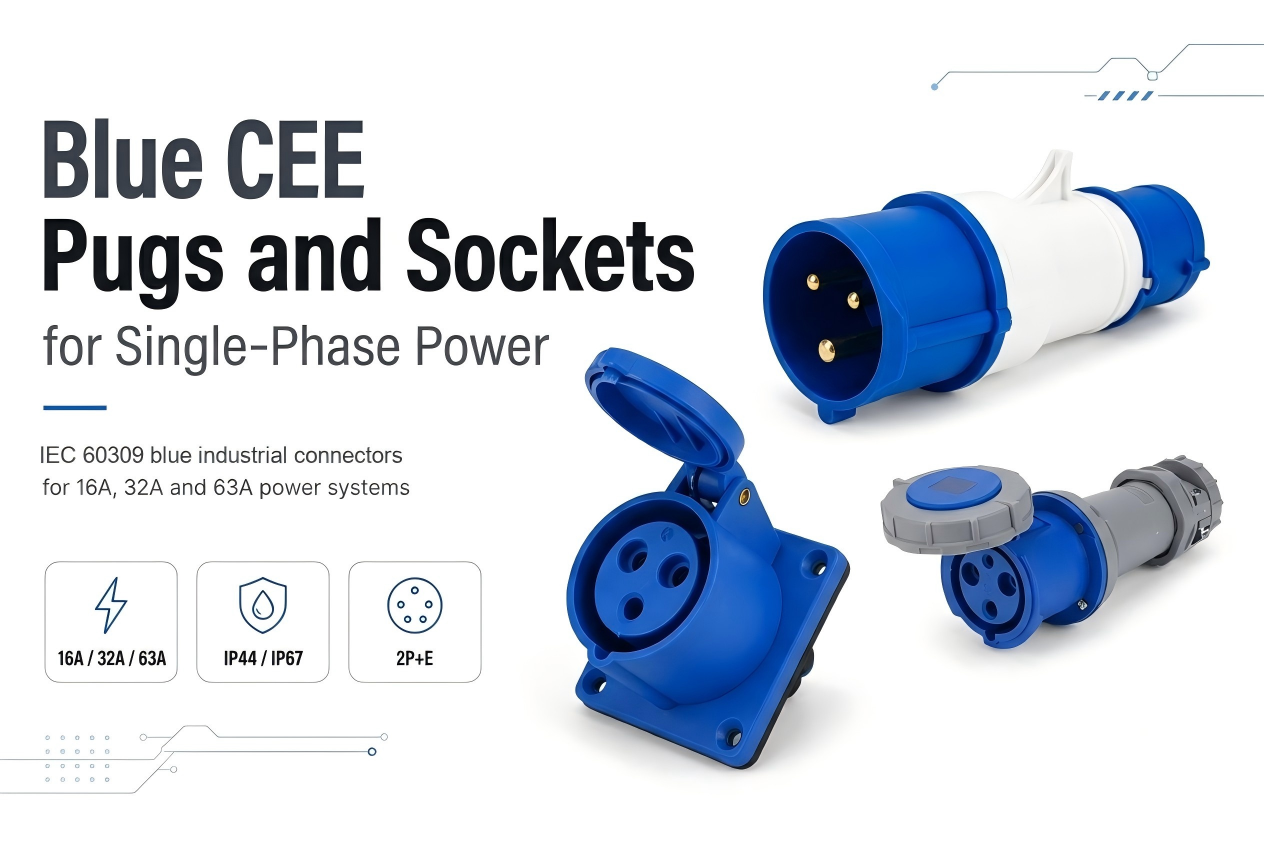
Blue CEE Plug for 200–250V Power
The blue CEE plug is commonly used for 200–250V power. In many European applications, a blue 16A CEE connector is associated with 230V single-phase power and is widely used for camping, caravans, portable equipment and EV charging. A blue CEE plug is often preferred over a domestic socket when the load is continuous and the installation is properly rated.
Need blue 2P+E CEE connectors?
Browse blue IEC 60309 plugs and sockets for 16A, 32A and 63A 220–250V single-phase applications.
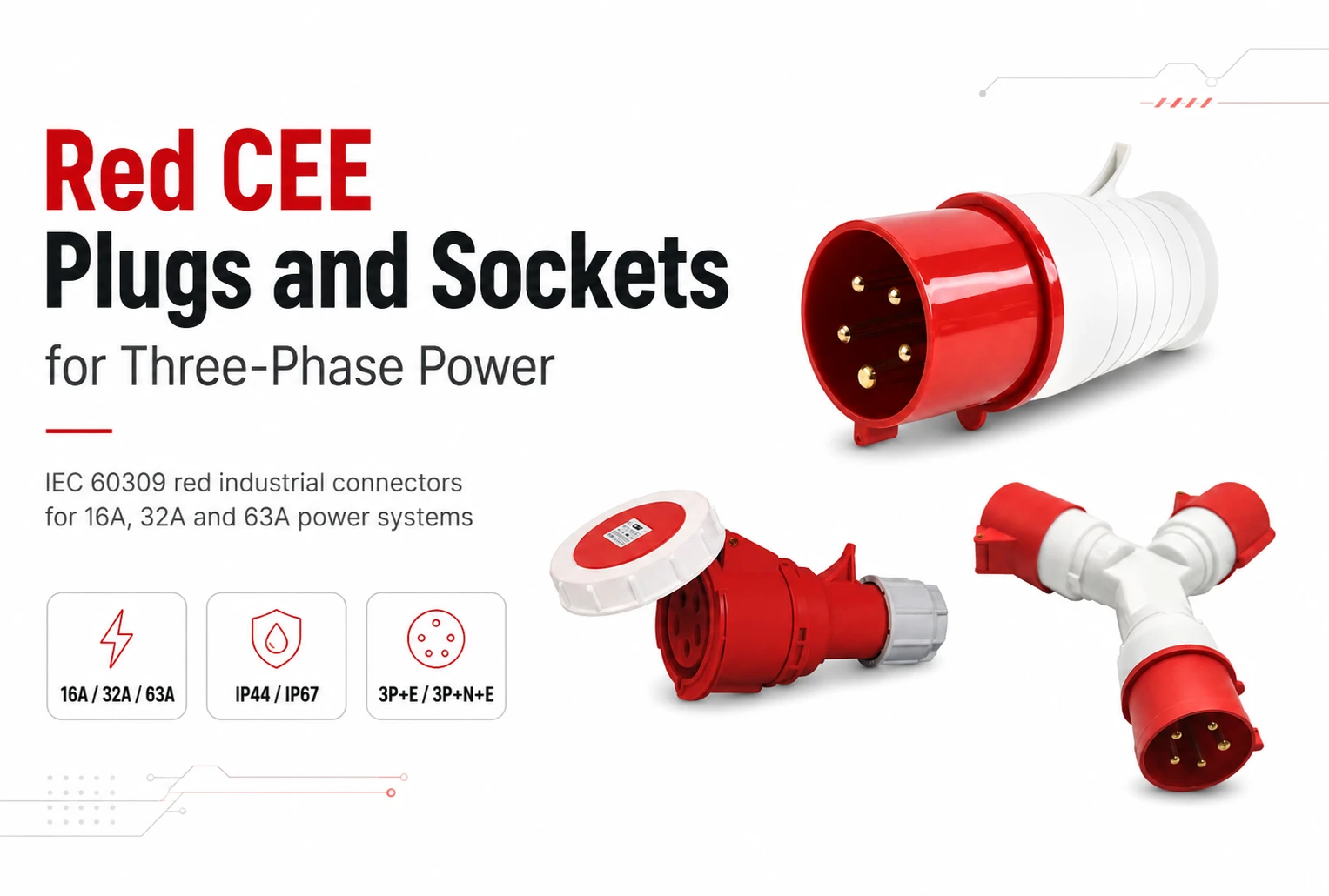
Red CEE Plug for Three-Phase Industrial Power
The red CEE plug is commonly associated with three-phase industrial power. For 3P+E connectors, the marking is often 380–415V or 380–480V. For 3P+N+E connectors, the marking may also show 220–415V or 230/400V because the connector includes a neutral conductor. Always check the printed voltage, pole configuration and earth position on the actual product.
Need red CEE connectors for three-phase power?
Browse red IEC 60309 plugs and sockets for 16A, 32A and 63A industrial power, including 3P+E and 3P+N+E options.
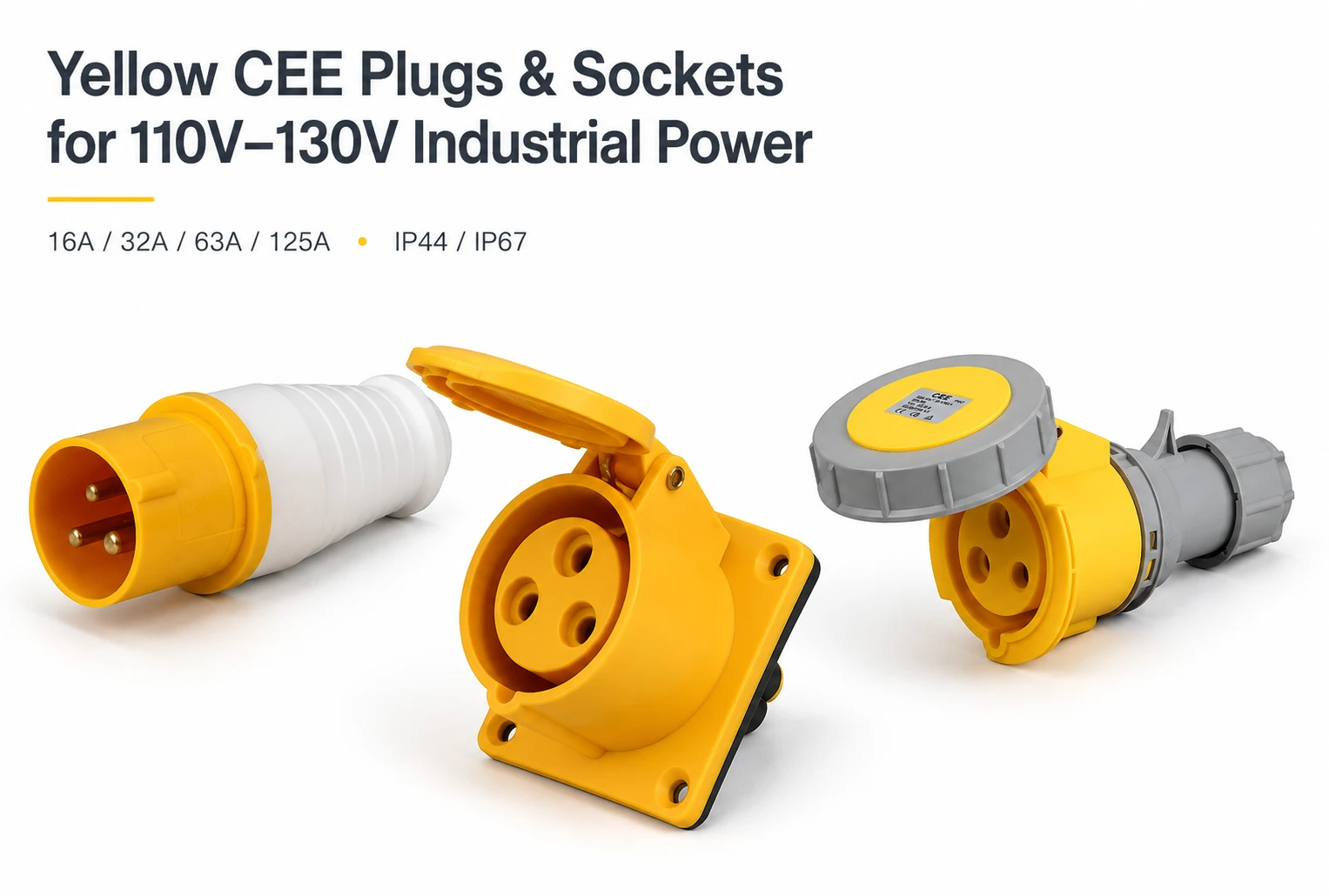
Yellow CEE Plug for 100–130V Site Power
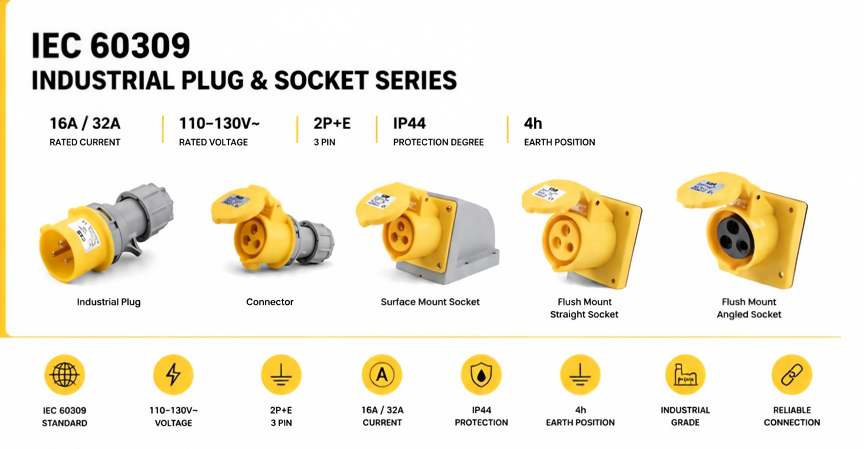
Yellow CEE plugs are also part of the CEE and IEC 60309 family. They are commonly associated with 100–130V site power, especially 110V construction site power in the UK. Users may not always search for “yellow CEE plug.” They may search for “110V site plug,” “yellow industrial plug,” “yellow commando plug” or “site power connector.”
Need yellow CEE connectors for 100–130V site power?
Browse yellow IEC 60309 plugs and sockets for 16A, 32A, 63A and 125A 100–130V industrial and construction site power applications.
4. 16A vs 32A CEE Plug: Which One Should You Choose?
The current rating is one of the most important specifications when selecting a CEE plug or socket. A 16A CEE plug and a 32A CEE plug are not just two versions of the same connector. They usually differ in size, cable requirement, circuit protection and intended load.
| Rating | Approx. Power at 230V Single Phase | Approx. Power at 400V Three Phase | Typical Use |
|---|---|---|---|
| 16A CEE | About 3.7kW | About 11kW | Camping power, overnight EV charging, smaller workshop equipment |
| 32A CEE | About 7.4kW | About 22kW | Higher-power EV charging, heavier machinery, power distribution boxes |
When 16A Is Enough
A 16A CEE plug is often enough for many practical applications. For example, a 230V 16A blue CEE connection provides about 3.7kW, which can be sufficient for overnight EV charging, small workshop equipment, camping power and portable devices that do not require high current. In three-phase 400V applications, 16A can provide about 11kW, which is already enough for many home and light industrial use cases.
When 32A Makes Sense
A 32A CEE plug makes sense when the connected equipment actually supports the higher current and the electrical installation is designed for it. It may be useful for faster EV charging, higher-power machinery, event power distribution or future expansion. However, choosing 32A only for “more power” is not always necessary if the equipment, charger or vehicle cannot use it.
Why 16A and 32A Are Not Freely Interchangeable
Do not assume that a 32A plug can simply be used with a 16A socket or that any adapter is safe. The plug, socket, cable and breaker must protect the weakest part of the system. A 16A socket or cable should not be allowed to carry a 32A load. If an adapter is used from a larger-rated supply to a smaller-rated connector, it should include the correct protection so the smaller side cannot be overloaded.
5. What Do 2P+E, 3P+E and 3P+N+E Mean?
CEE plugs are often described by pole configuration. This tells you how many live conductors, neutral conductors and earth conductors the connector is designed for. The pole configuration must match the power supply and the connected equipment.
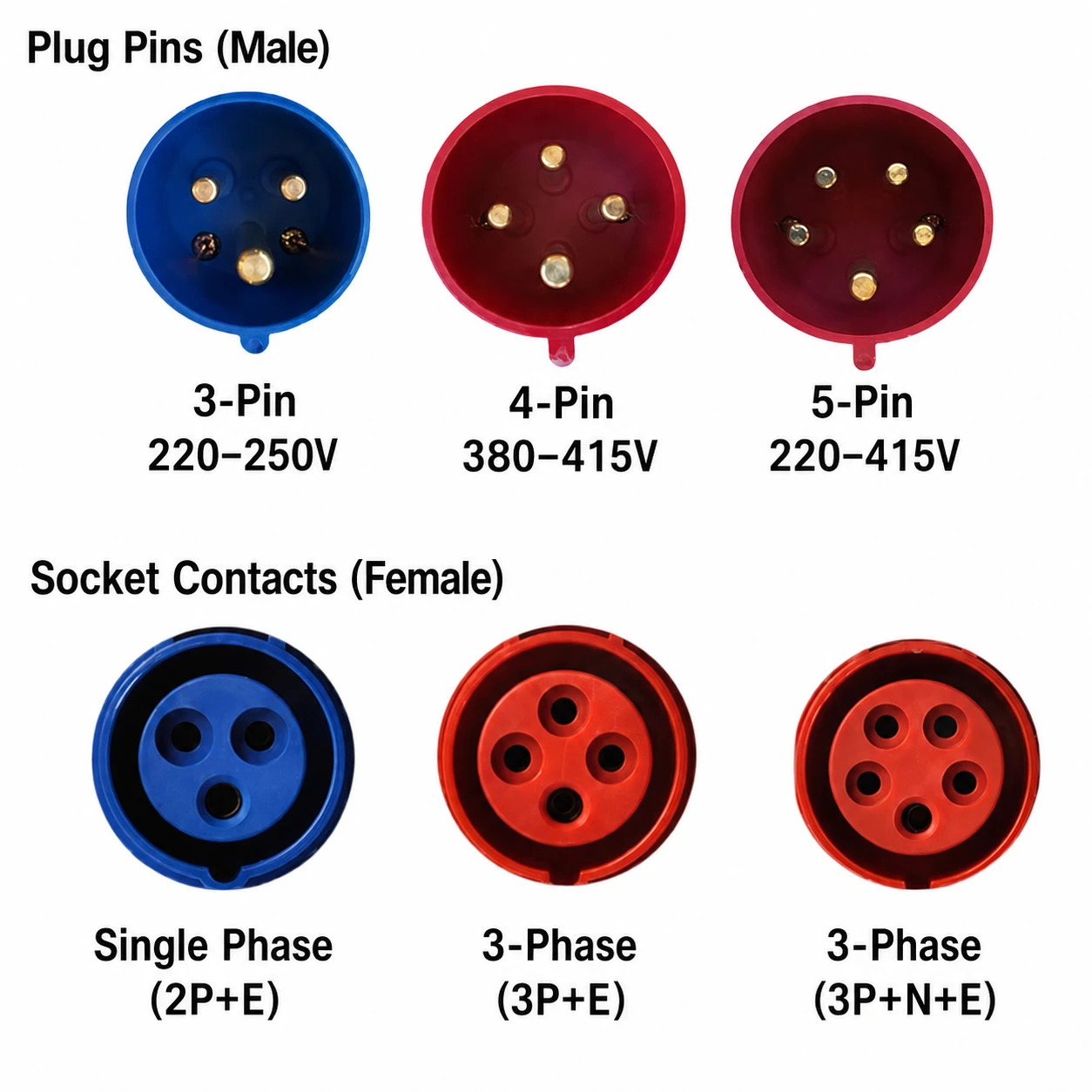
Typical front-view examples of IEC 60309 / CEE plug pins and socket contact layouts. Always check the marking on the actual product before wiring or selection.
| Marking | Meaning | Typical Use |
|---|---|---|
| 2P+E | Two poles plus earth, commonly line and neutral plus earth | Single-phase CEE plugs, often blue 230V types |
| 3P+E | Three phase conductors plus earth, no neutral | Three-phase equipment that does not require neutral |
| 3P+N+E | Three phase conductors, neutral and earth | Three-phase systems that need neutral for control or mixed loads |
2P+E for Single-Phase Power
A 2P+E CEE connector is commonly used for single-phase power. In a typical blue 230V CEE plug, this usually means line, neutral and protective earth. It is often used for portable tools, camping power, EV charging adapters and other single-phase equipment.
3P+E vs 3P+N+E for Three-Phase Systems
A 3P+E connector has three phase conductors and earth, but no neutral. It is suitable for equipment that does not require a neutral conductor. A 3P+N+E connector includes three phases, neutral and earth, and is used when the equipment or distribution system needs neutral for control circuits, single-phase loads or mixed load distribution.
A red 5-pin 3P+N+E connector may be marked 220–415V or 230/400V because it can involve both phase-to-neutral voltage and phase-to-phase voltage in a three-phase system. This is why the voltage marking may look different from a red 4-pin 3P+E connector, even though both are part of the red CEE three-phase family.
Earth Hour Position and 6h Keying
Besides color and pole configuration, IEC 60309 / CEE connectors also use an earth contact clock position, often described as the hour position. For many common low-voltage industrial connectors, such as standard blue 230V and red 400V-class types, the earth contact is commonly found at the 6h position. This keying design helps prevent connectors with different voltage or frequency ratings from being accidentally mated.
However, do not assume every CEE plug uses the same earth position. Special voltage ranges, frequency ratings and regional variants may use different keying positions. Always check the product marking, datasheet and matching socket before use.
6. IP44 vs IP67 CEE Plug: Indoor, Outdoor and Harsh Environments
CEE plugs are often used in outdoor or industrial environments, so IP rating is important. IP44 and IP67 are both common, but they are designed for different levels of protection.
| IP Rating | Protection Level | Best For | Limitations |
|---|---|---|---|
| IP44 CEE | Splash-resistant and protected against solid objects larger than 1mm | Indoor industrial areas, sheltered outdoor sockets, covered temporary power | Not suitable for immersion, heavy rain exposure or water pooling |
| IP67 CEE | Dust-tight and protected against temporary immersion under defined conditions | Exposed outdoor use, wet job sites, harsh industrial environments | Requires correct mating, sealing caps and cable gland installation |
When IP44 Is Enough
IP44 may be enough for indoor areas, covered outdoor use or locations where the connector is protected from direct rain, water pooling, immersion and pressure washing. It is common for many general-purpose CEE plugs and sockets used in workshops, covered power boxes and sheltered temporary installations.
When IP67 Is the Safer Choice
IP67 is a better choice when the connector may face rain, dust, mud, wet ground, washdown areas or harsh outdoor exposure. IP67 CEE plugs usually have stronger sealing features, such as screw collars or tighter mating structures. The rating is only meaningful when the plug and socket are correctly mated and the sealing parts are in good condition.
Common Outdoor Power Mistakes
A common mistake is assuming that any outdoor-looking connector is waterproof enough. Another mistake is using an IP44 connector in a place where water can collect around the socket or cable connection. Outdoor power should be planned based on real exposure, not only product appearance.

7. How to Choose the Right CEE Plug or Socket
Step-by-Step CEE Plug Selection Checklist
- Confirm the voltage range. Use the connector color and printed voltage rating together. Yellow is commonly used for 100–130V site power, blue for 200–250V systems, and red for many three-phase systems. Red 5-pin 3P+N+E versions may be marked 220–415V or 230/400V because they include neutral.
- Check the current rating. Choose 16A, 32A, 63A or higher according to the equipment load, cable size and circuit protection.
- Match the pole configuration. Select 2P+E, 3P+E or 3P+N+E based on the supply system and equipment requirement.
- Check the earth hour position. Confirm the clock position, such as 6h, to avoid mismatched voltage or frequency connections.
- Choose the right IP rating. Use IP44 for protected environments and IP67 for more demanding outdoor or wet conditions.
- Select the installation type. Decide whether you need a cable plug, connector, wall socket, panel mount receptacle, surface socket or socket box.
- Review adapter safety. Avoid adapters that allow a lower-rated cable, socket or device to be overloaded.
- Ask a qualified electrician when needed. This is especially important for EV charging, fixed wiring, outdoor sockets and three-phase systems.
Common Mistakes to Avoid
- Choosing a CEE plug by color only without checking the printed voltage and pole configuration.
- Assuming voltage is determined only by color or only by pin count.
- Using a worn household socket for long continuous high-current loads.
- Connecting a 32A device to a 16A socket without proper current limiting.
- Ignoring cable cross-section and cable length.
- Assuming all blue CEE plugs are single-phase in every market.
- Assuming IP44 is enough for exposed outdoor use.
- Ignoring the earth contact hour position.
- Trying to rewire three-phase CEE connectors without professional verification.
Once you know the required voltage, current rating, pole configuration and IP protection level, you can browse all available CEE industrial plugs and sockets in one product category.
8. FAQ About CEE and IEC 60309 Plugs
Is a CEE plug the same as an IEC 60309 plug?
In most product and user discussions, yes. CEE plug is a common market name, while IEC 60309 refers to the industrial plug and socket standard family. You may also see names such as CEEform, Commando plug or pin and sleeve connector.
Is a yellow CEE plug really a CEE plug?
Yes. A yellow CEE plug is part of the CEE and IEC 60309 industrial connector family. It is commonly associated with 100–130V power, especially 110V construction site power in the UK.
What is the difference between blue and red CEE plugs?
Blue CEE plugs are commonly used for 200–250V power, often single-phase in many European applications. Red CEE plugs are commonly used for three-phase industrial power. Depending on pole configuration, a red connector may be marked 380–415V, 380–480V, 220–415V or 230/400V. Always check the printed voltage, current rating, pole configuration and earth position.
Why does a red 5-pin CEE plug show 220–415V or 230/400V?
A red 5-pin CEE plug is usually a 3P+N+E connector. Because it includes three phase conductors, neutral and earth, the marking may reflect both phase-to-neutral voltage and phase-to-phase voltage. That is why some red 5-pin connectors show 220–415V or 230/400V instead of only 380–415V.
What does 2P+E mean on a CEE plug?
2P+E means two poles plus earth. In many single-phase 230V applications, this corresponds to line, neutral and protective earth.
What does 3P+N+E mean?
3P+N+E means three phase conductors, neutral and earth. It is used for three-phase systems where neutral is required for control circuits, single-phase loads or mixed distribution.
What does 6h mean on a CEE plug?
6h refers to the earth contact clock position. Many common blue 230V and red 400V-class IEC 60309 connectors use a 6 o’clock earth position, but special voltage or frequency types may use other positions. Always match the plug and socket by marking and datasheet.
Can I use a 32A CEE plug with a 16A socket?
Not directly unless the adapter and protection are correctly designed. The system must protect the lowest-rated part of the circuit. A 16A socket, cable or device should not be allowed to carry 32A.
Is IP44 enough for outdoor CEE sockets?
IP44 may be enough for sheltered outdoor use, but exposed rain, wet ground, water pooling or harsh industrial conditions usually require a higher level such as IP67. The final choice depends on the installation environment and local requirements.
Should I replace Schuko with blue CEE for EV charging?
A blue CEE socket can be a more robust option for regular continuous loads, but the full installation must be checked. Cable size, circuit protection, RCD, grounding and local regulations are just as important as the connector itself.
Final takeaway: A CEE plug is not just a colored industrial plug. It is a rated power connection system. To choose the right IEC 60309 connector, check the printed voltage, color clue, current rating, pole configuration, earth hour position, IP rating and installation environment. For high-current, outdoor, EV charging or three-phase applications, always use properly rated components and involve a qualified electrician when necessary.