
Search for products...

 0
0RF coaxial connectors are designed to transmit radio frequency, microwave and high-speed signals while maintaining consistent impedance throughout the signal path. They connect coaxial cables, circuit boards, antennas and electronic equipment while helping reduce signal loss, reflections and electromagnetic interference.
Elecbee offers RF connector solutions for wireless communication, telecommunications, broadcast systems, test equipment, automotive electronics and high-frequency applications. Available options include threaded, bayonet and snap-on interfaces in cable-mount, panel-mount and PCB-mount configurations.
The right connector depends on frequency range, impedance, coupling mechanism, size, cable compatibility, mounting method and operating environment. For an overview of these selection factors, see our RF connector selection guide and RF connector types and frequency range guide.
BNC connectors use bayonet coupling for fast connection and disconnection. They are widely used in test instruments, video systems, radio equipment and other applications requiring frequent mating. Both 50-ohm and 75-ohm versions are available. Our BNC vs TNC guide explains how their coupling mechanisms and applications differ.
TNC connectors combine a threaded interface with a compact coaxial structure, providing more secure retention in equipment exposed to vibration. For larger outdoor and telecommunications systems, N Type connectors provide a rugged threaded connection suitable for antennas, base stations and higher-power RF applications. Read our TNC vs N Type comparison for more guidance.
UHF connectors are commonly used in amateur radio, CB radio, two-way communication equipment and lower-frequency RF systems. They offer a durable threaded connection but are generally better suited to applications where precision impedance control at microwave frequencies is not required.
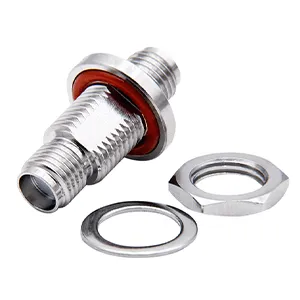
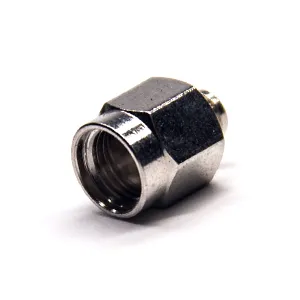
SMA connectors provide a compact threaded interface for antennas, WiFi equipment, GPS receivers, cellular devices, radio modules and microwave circuits. When choosing an SMA connector, verify the frequency rating, polarity, orientation and mounting method. Our SMA connector guide covers its structure and common applications.
For higher-frequency test and measurement systems, compare standard SMA interfaces with precision connectors in our SMA vs 3.5mm connector guide.
SMB connectors use snap-on coupling for fast mating in compact communication, automotive and instrumentation equipment. See our SMB connector guide for additional information about installation and applications.
MCX connectors and MMCX connectors are miniature snap-on RF interfaces used in GPS receivers, antennas, wireless modules, embedded devices and other space-constrained equipment. MMCX connectors are smaller than MCX connectors and are often selected where PCB space and connector height are limited.
F Type connectors are typically used with 75-ohm coaxial systems for cable television, satellite receivers, broadband equipment and video distribution. Confirm cable size and termination method when selecting connectors for RG6, RG59 and similar coaxial cables.
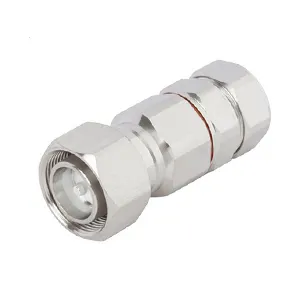
DIN 7/16 connectors provide a rugged threaded interface for cellular base stations, antenna systems, repeaters and other telecommunications infrastructure. Their construction supports higher-power RF transmission and demanding outdoor installations.
FAKRA connectors use color-coded and mechanically keyed housings to help prevent mismating in automotive applications. They are commonly used for GPS antennas, AM/FM radio, satellite radio, telematics, vehicle cameras and other in-vehicle RF connections.
HSD connectors are shielded differential connectors designed for high-speed automotive data transmission. They are used for automotive Ethernet, cameras, infotainment, displays, USB and other digital links rather than conventional single-channel RF transmission.
Microwave connectors include precision interfaces for higher-frequency RF, microwave and millimeter-wave systems. This category covers connector families such as 2.92mm, 3.5mm, SMP and other precision interfaces used in test equipment, radar, communication and high-frequency circuit applications.
For connector series or configurations not covered by the main categories, browse Other RF Coaxial Connectors. This section includes additional compact, specialized and less common RF interface types.
Impedance should remain consistent across the connector, cable and connected equipment to minimize signal reflections and transmission loss.
Connectors with similar physical interfaces may have different impedance versions. Always check the product specification instead of relying only on connector appearance.
Browse the RF coaxial connector categories above to compare connector series, impedance, frequency range, mounting styles and termination options for your application.