

 0
0
Connector contact plating directly affects electrical performance, corrosion resistance, and long-term reliability. Choosing the right plating ensures stable signal transmission, lower contact resistance, and longer connector lifespan.
This guide compares gold, silver, and tin plating for connector contacts, with clear performance data, cost factors, and application recommendations.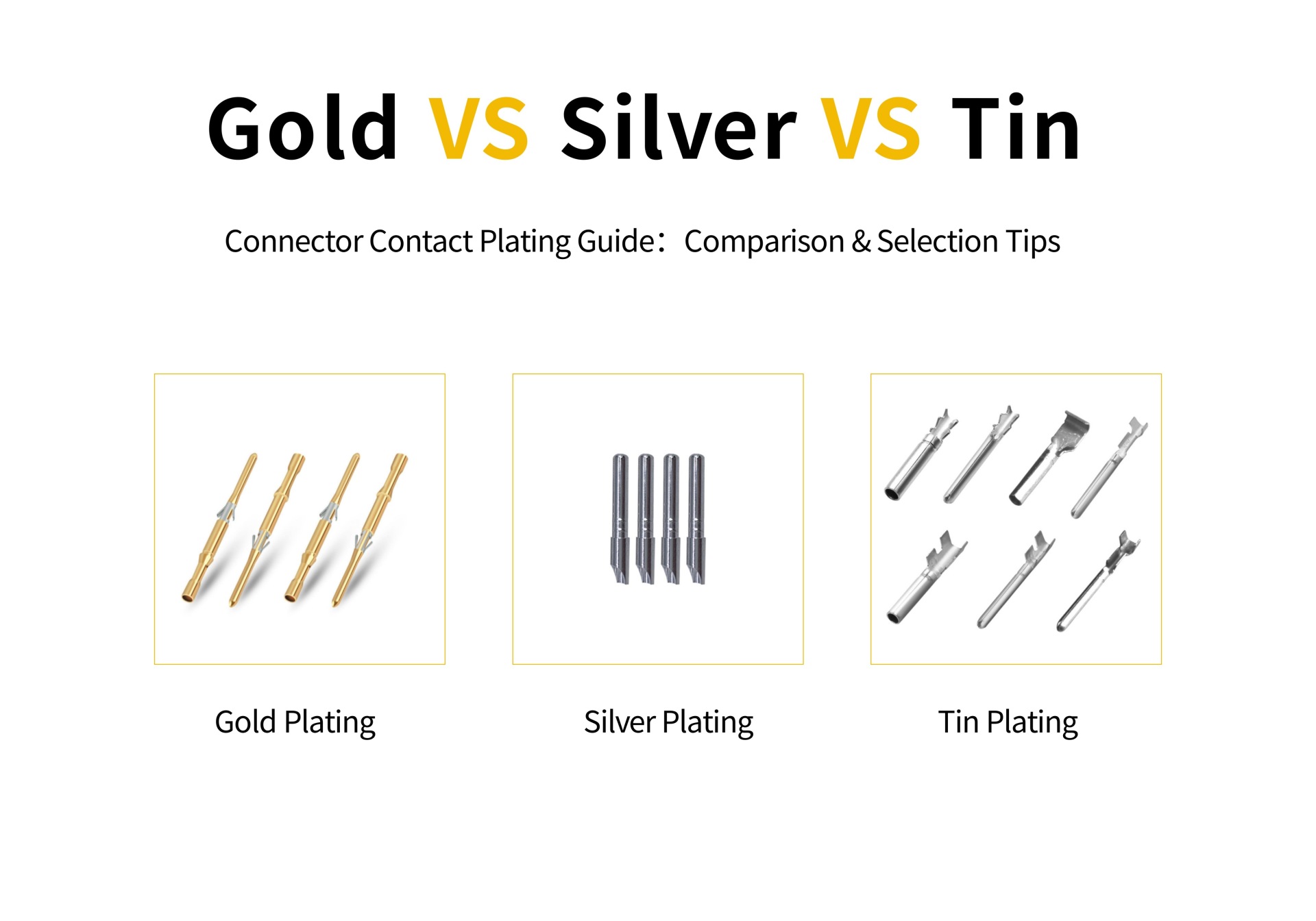
1.Why Connector Contact Plating Matters
Connector contacts are usually made of copper alloys, which require plating for:
• Lower contact resistance
• Improved corrosion and wear resistance
• Better solderability and long-term stability
• Reliable signal and power transmission
Typical plating materials: gold, silver, tin.

2.Gold vs Silver vs Tin: Key Performance Comparison
|
Property |
Gold Plating |
Silver Plating |
Tin Plating |
|
Conductivity |
Excellent |
Best |
Good |
|
Corrosion Resistance |
Excellent |
Poor in sulfur environment |
Moderate |
|
Wear Resistance |
High |
Moderate |
Low |
|
Solderability |
Good |
Good (until tarnish) |
Excellent |
|
Cost |
Highest |
Moderate |
Low |
|
Best Use |
High-reliability, harsh environments |
High-current, clean environments |
PCB, consumer electronics |
3.Gold Plating: High Reliability & Harsh Environments
Gold is chemically inert, offering excellent corrosion resistance and stable conductivity.

Recommended for
• Medical devices
• Military and aerospace
• Telecom base stations
• Industrial automation
Cost optimization technique
• Nickel under-plating
• Palladium-nickel + flash gold for cost-sensitive designs

4.Silver Plating: Best Conductivity for High-Current Applications
Silver provides the lowest electrical resistance.
However, silver sulfide forms in sulfur-rich environments, reducing conductivity.
Recommended for
• High-current power modules
• RF and microwave connectors
• Automotive power distribution (sealed conditions)
Avoid
• Polluted or sulfur-rich environments unless protected

5.Tin Plating: Cost-Effective for PCB and Consumer Devices
Tin offers excellent solderability and good cost-performance balance.
Recommended for
• PCB connectors and terminals
• Home appliances & consumer electronics
• Automotive low-current systems

Notes
• Tin whiskers risk → control via nickel barrier layer and plating process
• Common in SMT connectors
6.Best Plating by Application
|
Application |
Recommended Plating |
|
High-reliability aerospace/medical |
Gold |
|
High-current industrial systems |
Silver |
|
Consumer electronics & PCB |
Tin |
|
Cost-sensitive industrial |
Palladium-nickel + Gold flash |
7.Cost Considerations
|
Application |
Recommended Plating |
|
High-reliability aerospace/medical |
Gold |
|
High-current industrial systems |
Silver |
|
Consumer electronics & PCB |
Tin |
|
Cost-sensitive industrial |
Palladium-nickel + Gold flash |

8.Industry Standards & Reliability Testing
• IPC-A-610 (Solder & plating acceptance)
• MIL-DTL-38999 / MIL-DTL-45204 (Military connectors & plating)
• IEC 60512 (Connector testing)
• Contact resistance
• Salt spray
• Wear & mating cycles
• Temperature cycling
9.FAQ
Yes. Thicker gold plating improves durability for high-mating-cycle connectors.
Silver reacts with sulfur to form silver sulfide. Protection required in polluted environments.
Tin for consumer/PCB; gold for high reliability and low-signal-loss needs.
If you need gold-plated, silver-plated, or tin-plated connectors for industrial, automotive, or PCB applications, explore our high-quality connector series across multiple current and signal levels.