

 0
0
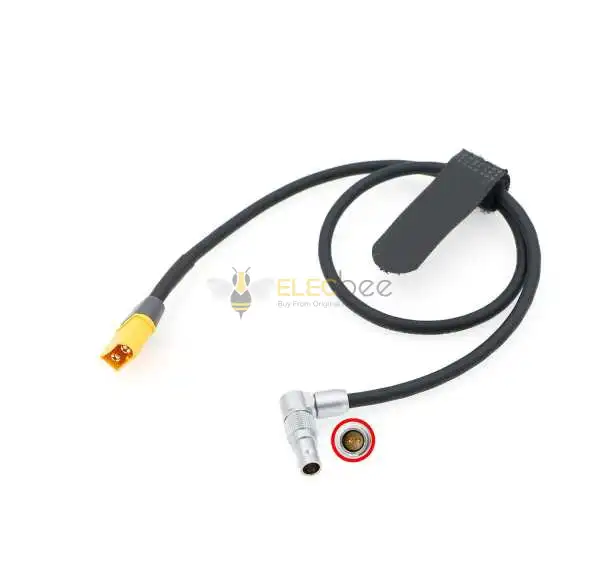
Wenn Sie schon einmal nach “XT60 vs XT90” gesucht haben, bevor Sie ein RC-Auto, eine FPV-Drohne oder ein Hochleistungs-Batteriesystem gebaut oder aufgerüstet haben, sind Ihnen wahrscheinlich immer wieder dieselben verwirrenden Antworten begegnet.
Manche sagen, XT60 sei für fast alles ausreichend. Andere bestehen darauf, dass XT90 die einzig sichere Wahl ist, sobald Sie auf 4S, 6S oder einen ESC mit höherer Stromstärke umsteigen. Dann gibt es noch die Frage nach dem Adapter: Kann man einfach einen XT60-auf-XT90-Adapter verwenden und es dabei belassen?
Die Wahrheit ist praktischer als extrem. In den meisten Fällen hängt der richtige Stecker weniger von der Angabe auf Ihrem ESC ab als von Ihrer tatsächlichen Stromaufnahme, dem Batterietyp, der Fahrzeuggröße, dem Flug- oder Fahrstil und davon, wie sauber Ihre Lötverbindungen sind.
Dieser Leitfaden erklärt den wirklichen Unterschied zwischen XT60 und XT90, wann welcher Sinn ergibt und wie Sie die richtige Wahl treffen, ohne Ihren Aufbau zu zerdenken.
1.XT60 vs XT90: Was ist der wirkliche Unterschied?
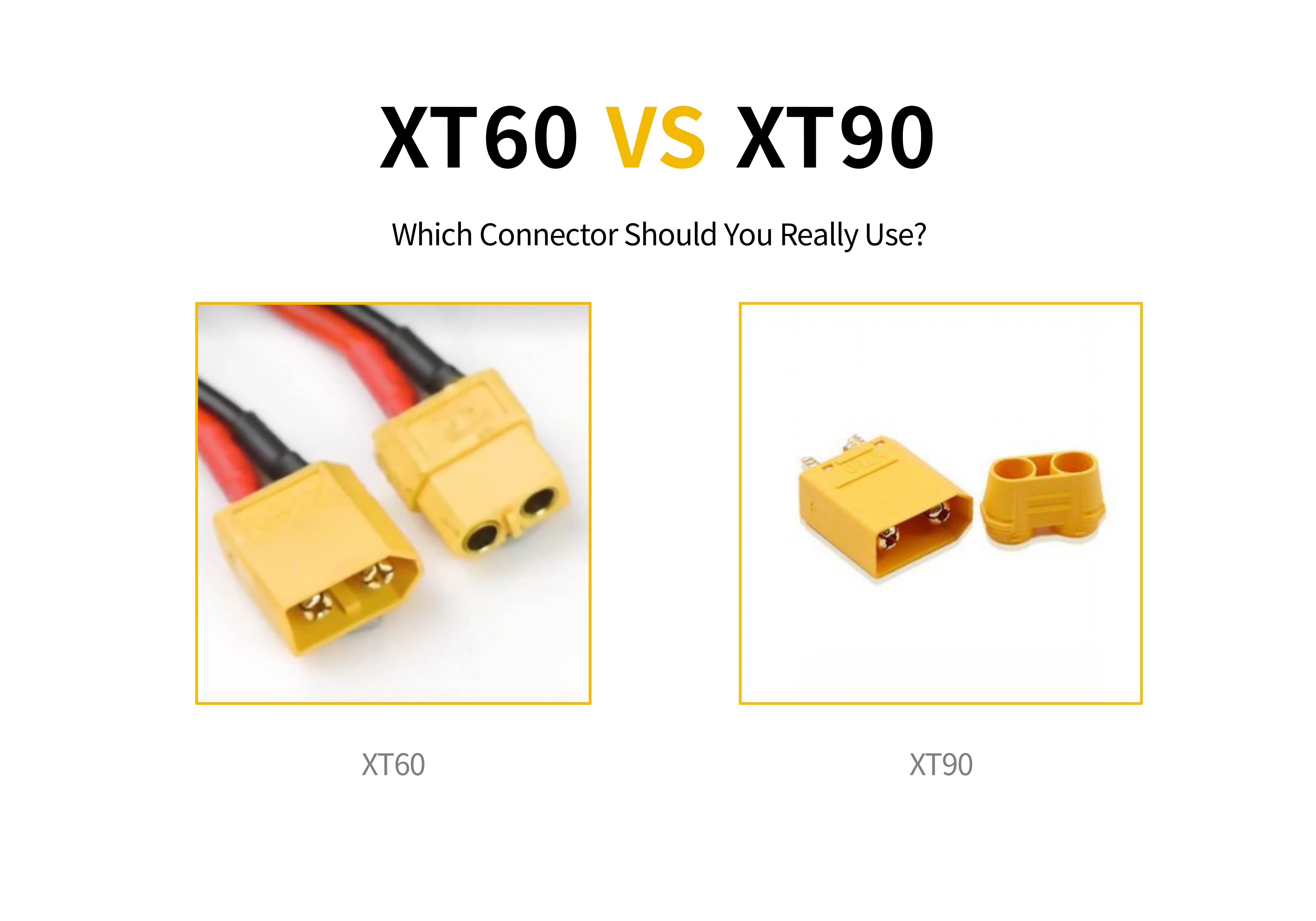
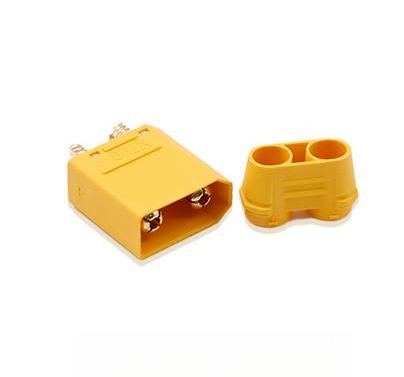
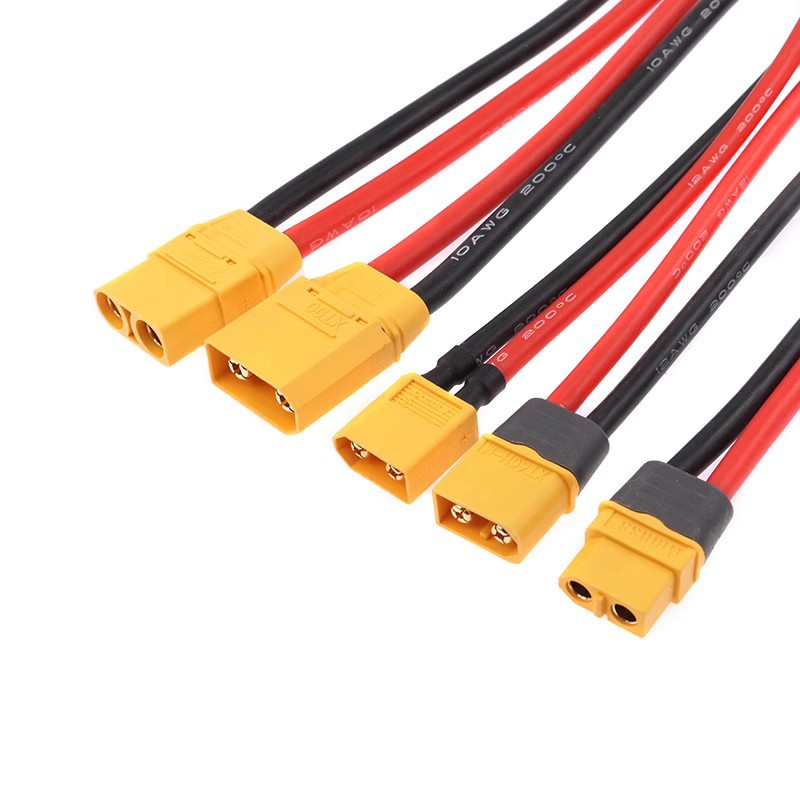
Grundsätzlich sind XT60 und XT90 beide Hochstrom-DC-Stromsteckverbinder, die häufig in RC-Autos, FPV-Drohnen und batteriebetriebenen Hobbysystemen verwendet werden. XT90 ist physisch größer, schwerer und für höhere Ströme ausgelegt als XT60. Deshalb betrachten Hobbyanwender XT60 oft als die Wahl für Systeme mit mittlerer Leistung und XT90 als die sicherere Option für größere oder anspruchsvollere Setups.
Es gibt jedoch ein wichtiges Detail, das viele übersehen: Der Name des Steckverbinders entspricht nicht immer einem garantiert realen Dauerstrom unter allen Bedingungen. Öffentlich verfügbare Amass-Katalogdaten für bestimmte XT60- und XT90-Varianten zeigen Nennströme, die konservativer ausfallen können, wenn Kabelquerschnitt, Temperaturanstieg und das genaue Modell berücksichtigt werden. In einem Amass-Katalog sind einige XT60-Varianten unter festgelegten Bedingungen mit maximal 35 A und einige XT90-Varianten mit maximal 45 A aufgeführt, während ein RS-Datenblatt für einen XT90S-Anti-Funken-Stecker einen Nennstrom von 40 A und einen Momentanstrom von 90 A angibt.
Das bedeutet nicht, dass XT60 “in Wirklichkeit nur 35 A” in jedem Hobbyeinsatz verträgt oder dass XT90 schwach ist. Es bedeutet, dass Sie die Hobby-Kurzformeln “XT60 = 60A” und “XT90 = 90A” als grobe Kategorie verstehen sollten und nicht als Ausrede, Wärme, Kabelgröße, Steckerqualität oder Einschaltdauer zu ignorieren.
Im realen Einsatz bietet XT90 mehr Kontaktfläche, mehr thermische Reserve und ein leichteres Handling. XT60 bietet Ihnen einen leichteren, kompakteren Stecker, der für Systeme mit moderater Leistung oft völlig ausreichend ist.
|
Merkmal |
XT60 |
XT90 |
|
Typische Stromkategorie |
~60A |
~90A |
|
Größe |
Kleiner |
Größer |
|
Gewicht |
Leichter |
Schwerer |
|
Typische Verwendung |
3S–4S-Systeme |
Hochleistungs-Bauten |
|
Handhabung |
Kompakt |
Leichter zu greifen |
2.Wann XT60 die bessere Wahl ist
XT60 ist oft die bessere Wahl, wenn Ihr Setup kompakt, vernünftig effizient ist und nicht über längere Zeiträume nahe an der oberen Belastungsgrenze des Steckverbinders betrieben wird.
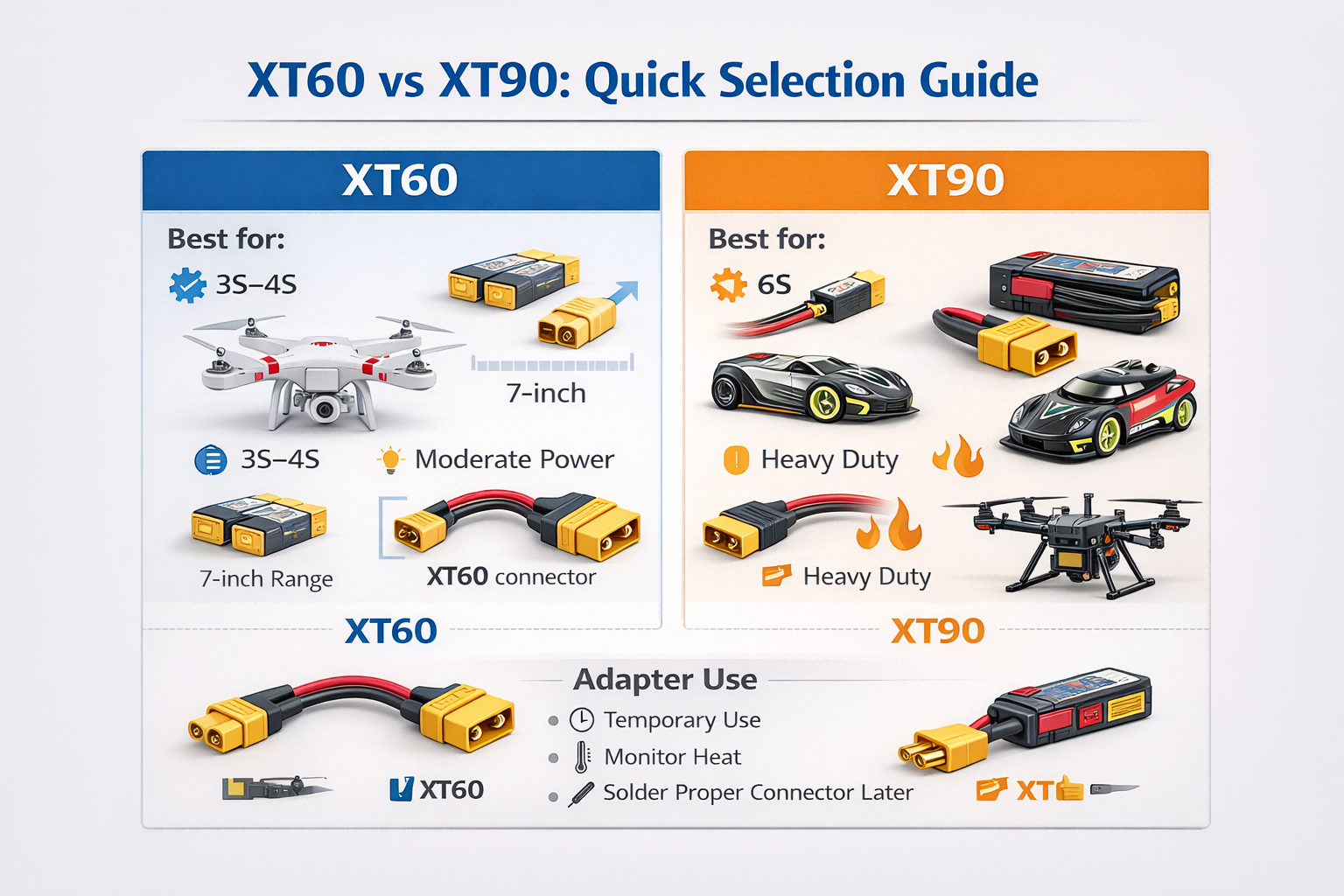
Für viele 3S-Setups und eine große Zahl von 4S-Anwendungen funktioniert XT60 sehr gut. Genau deshalb bleibt es einer der gebräuchlichsten Batteriestecker im FPV- und RC-Bereich. In vielen realen Setups wird XT60 problemlos in 3S-Systemen verwendet und gilt auch als geeignet für 7-Zoll-Langstrecken-Bauten, bei denen die Stromaufnahme relativ gering ist und dauerhafte Effizienz wichtiger ist als kurze Spitzenleistungsphasen.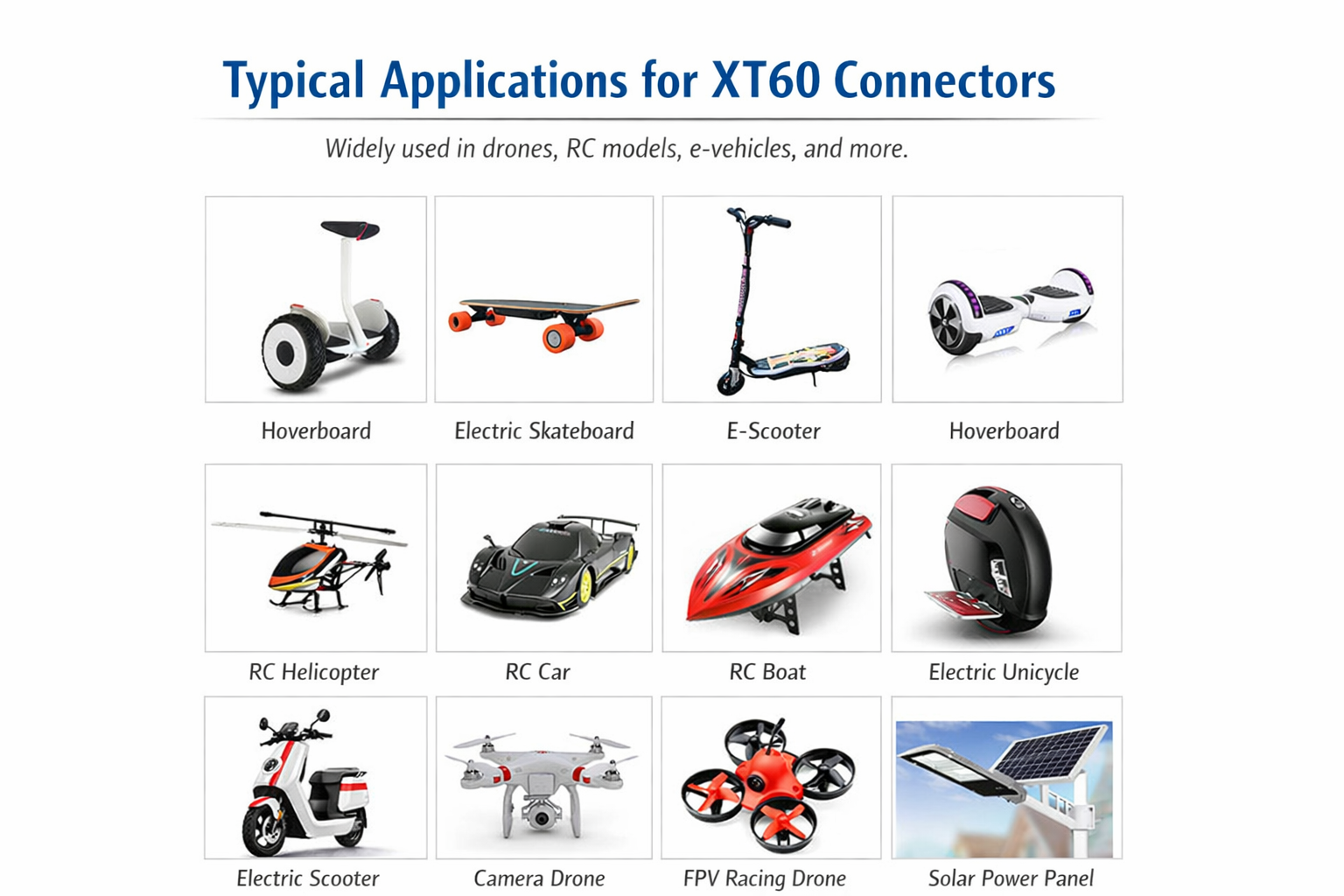
Diese Logik ist schlüssig.
Eine 7-Zoll-Langstreckendrohne ist ein gutes Beispiel. Langstrecken-Bauten priorisieren normalerweise ruhiges Cruisen, geringeren Gasanteil und Batterieeffizienz. Wenn das Fluggerät nicht für harten Freestyle oder wiederholte Vollgasphasen ausgelegt ist, reicht XT60 oft aus. Den Stecker kleiner und leichter zu halten, kann sogar ein Vorteil sein.
XT60 ist außerdem sinnvoll, wenn:
• Ihre Batterien bereits mit XT60 ausgestattet sind
• Ihr Ladegerät und Ihr gesamter Bestand auf XT60 standardisiert sind
• Ihre Plattform mittelgroß statt schwerlasttauglich ist
• Ihr Ziel Komfort ohne unnötige Masse ist
Kurz gesagt ist XT60 in der Regel die richtige Antwort für Bauten, die effizient, leistungsmäßig moderat und das Stromsystem nicht ständig an der Grenze belasten.
3.Wann XT90 mehr Sinn ergibt
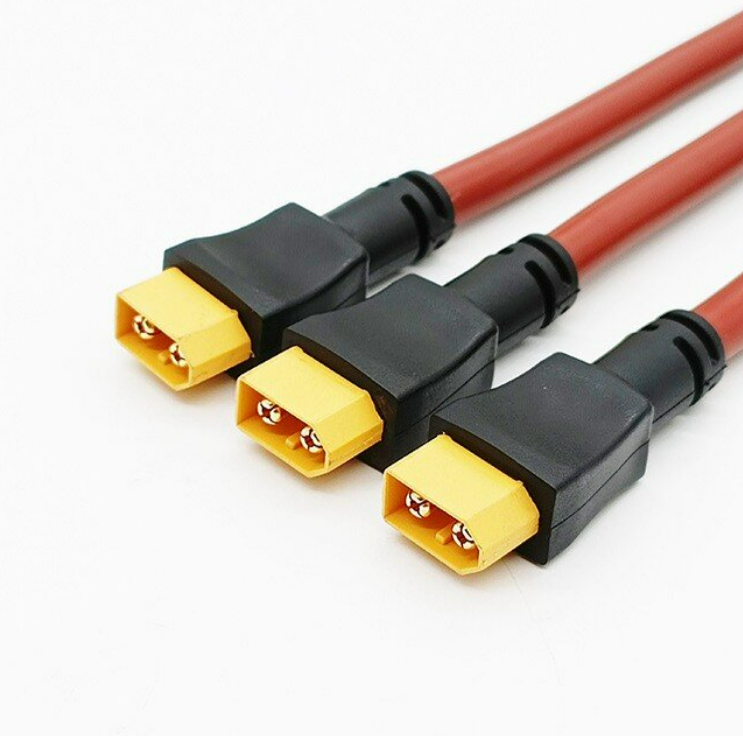
XT90 ergibt mehr Sinn, wenn Ihr Aufbau größer, schwerer, aggressiver ist oder sich einfach näher an dem bewegt, was ein XT60-Setup komfortabel verkraften kann.
Dazu gehören:
• RC-Autos mit hoher Stromstärke
• größere 4S- oder 6S-Plattformen
• Drohnen mit hoher Nutzlast
• Fahrzeuge mit wiederholten Hochgas-Belastungsspitzen
• Systeme, bei denen Sie zusätzliche thermische Reserve und ein gutes Sicherheitsgefühl möchten
Ein Grund, warum XT90 so häufig empfohlen wird, ist nicht nur die höhere Stromkategorie. Es ist auch leichter zu greifen, leichter zu trennen und vermittelt bei größeren Systemen mehr Vertrauen. Selbst wenn XT90 für manche Setups unnötig erscheinen mag, bevorzugen viele Nutzer es dennoch bei größeren Aufbauten, weil es leichter zu greifen und zu trennen ist.
Für 10-Zoll-Drohnen, Nutzlastdrohnen und größere RC-Autos ist XT90 oft die sicherere Langzeitwahl. Selbst wenn der Durchschnittsstrom nicht immer extrem ist, treten bei diesen Plattformen eher kurze Hochlast-Ereignisse, stärkere Beschleunigung, schwerere Batterien und rauere thermische Bedingungen auf.
XT90 kann auch die bessere Option sein, wenn Sie bereits zukünftige Upgrades planen. Wenn Sie wissen, dass bald ein leistungsstärkerer ESC, ein größerer Motoraufbau oder eine schwerere Batterie kommt, kann es klüger sein, einmal neu zu standardisieren, statt die Stecker später erneut zu wechseln.
4.XT60 vs XT90 für ESCs: Schauen Sie nicht nur auf ESC-Beschriftungen
Einer der größten Fehler von Anfängern ist es, die ESC-Angabe zu lesen und anzunehmen, der Stecker müsse direkt zu dieser Zahl passen.
Wenn ein ESC zum Beispiel 110A angibt, nehmen viele sofort an, dass XT60 unsicher ist und XT90 erforderlich sei. Aber so verhält sich das System in der Praxis nicht immer.
Zunächst müssen Sie Dauerstrom und Spitzenstrom voneinander trennen. Reale Fahrzeuge und Fluggeräte laufen nur selten dauerhaft bei maximaler Stromaufnahme. Ein Stecker, der normales Fahren oder Cruisen übersteht, kann also auch dann noch ausreichen, wenn das System gelegentlich höhere Spitzen zeigt.
Zweitens ist der Strom auf der Batterieseite nicht immer derselbe wie die dramatischste motorausgangsseitige Zahl, die Leute online zitieren. In Diskussionen über Drohnen mit mehreren Motoren multiplizieren Menschen oft eine theoretische maximale Motorstromaufnahme und geraten in Panik. Die tatsächliche Batterienachfrage hängt jedoch von Gasstellung, Batterietechnologie, Effizienz, Propellerwahl und davon ab, ob diese Spitzenwerte im realen Flug überhaupt erreicht werden.
Deshalb sehen Sie online zwei scheinbar widersprüchliche Meinungen, die beide teilweise stimmen:
• “XT60 reicht für den Langstreckeneinsatz völlig aus.”
• “XT90 ist für Hochleistungs-Setups sicherer.”
Der entscheidende Faktor ist keine einzelne Zeile in den Spezifikationen. Es ist das reale Lastprofil Ihres Aufbaus.
Eine praktische Regel lautet:
• Wenn Ihr Setup moderat, effizient und nicht stark aufgerüstet ist, reicht XT60 normalerweise aus.
• Wenn Ihr Setup groß, schwer, spitzenlastig oder auf Leistungsreserve ausgelegt ist, ist XT90 die sicherere Wahl.
5.Kann man einen XT60-auf-XT90-Adapter verwenden?
Technisch gesehen ja. Praktisch gesehen kommt es darauf an.
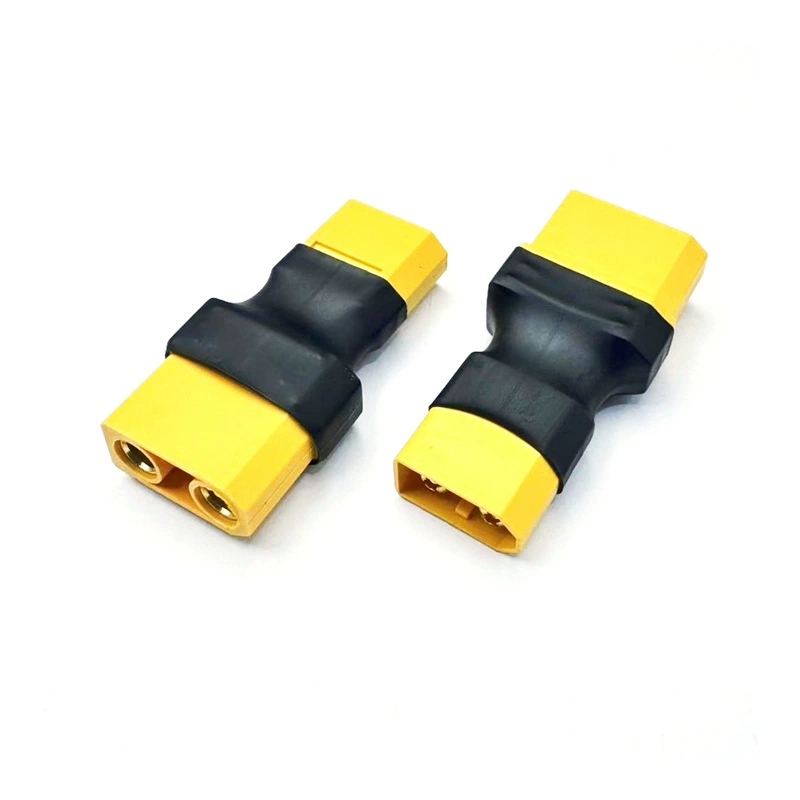
Ein XT60-auf-XT90-Adapter kann als vorübergehende Lösung akzeptabel sein, insbesondere wenn Sie auf die richtigen Stecker warten, ein Setup testen oder ein System verwenden, das nicht nahe an seiner Grenze betrieben wird. In der Regel ist er jedoch keine gute dauerhafte Lösung.
Jeder zusätzliche Verbindungspunkt erhöht den Widerstand, das Volumen und schafft eine weitere Stelle, an der sich Wärme aufbauen kann. Genau deshalb empfehlen viele erfahrene Hobbyanwender, den richtigen Stecker anzulöten, statt sich langfristig auf einen Adapter zu verlassen. Hinweise aus dem Hobbybereich merken außerdem an, dass XT60 im Allgemeinen mit etwa 60A Dauerbetrieb verbunden wird, während Adapter zusätzliche Verluste und Unordnung im Strompfad verursachen können.
Wenn Ihr Setup bereits nahe an der Grenze liegt, ergibt der Adapter weniger Sinn. Wenn Ihre Verkabelung in einem engen RC-Chassis untergebracht ist, bringt er ebenfalls zusätzliche Umstände mit sich. Wenn Ihnen Zuverlässigkeit wichtig ist, gewinnt saubere Verkabelung meist.
Daher ist der beste Rat einfach:
• Vorübergehende Nutzung: in der Regel in Ordnung, wenn die Last moderat ist und Sie die Wärmeentwicklung überwachen
• Dauerhafte Nutzung in Hochlastsystemen: nicht empfohlen
• Beste langfristige Lösung: den richtigen Stecker anlöten
6.Warum Stecker überhitzen oder schmelzen
Wenn Leute sagen, “XT60 ist geschmolzen”, ist allein die Steckergröße oft nicht die ganze Geschichte.
Steckerausfälle entstehen meist durch eine Kombination von Faktoren:
A. Schlechte Lötung
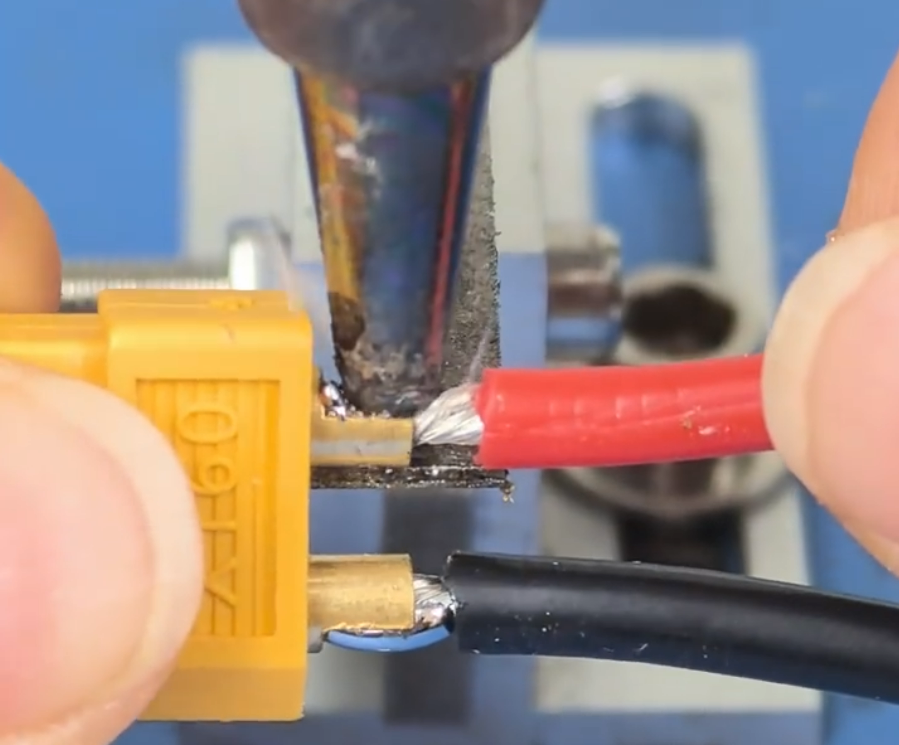
Kalte Lötstellen, schlechte Benetzung, zu wenig Lot oder eine unvollständige Füllung im Becher können den Widerstand schnell erhöhen. Das bedeutet mehr Wärme unter Last.
B. Falscher Kabelquerschnitt
Selbst ein guter Stecker kann heiß werden, wenn das Kabel für den Strom zu dünn ist.
C. Günstige Steckerqualität
Nicht alle XT-Stecker sind gleich. Kontaktbeschichtung, Toleranzen und Materialqualität sind wichtig.
D. Zu viele zusätzliche Schnittstellen
Adapter, abgenutzte Stecker oder lockere Verbindungen können zusätzliche Widerstandspunkte erzeugen.
E. Zu hoher Strom über zu lange Zeit
Kurze Spitzen sind das eine. Wiederholtes starkes Gasgeben oder anhaltende Last sind etwas anderes.
Deshalb sind Löt-Hinweise so wichtig. Viele erfahrene Hobbyanwender empfehlen, Flussmittel zu verwenden, sowohl Kabel als auch Stecker vorzuzinnen und daran zu denken, Schrumpfschlauch vor der Endmontage anzubringen. Das entspricht der allgemeinen Best Practice: Gute Materialien und gute Technik sind genauso wichtig wie die Wahl des Steckverbinders.
7.Welchen sollten Sie also wählen?
Hier ist die praktische Version.
Wählen Sie XT60, wenn:
• Sie 3S oder viele typische 4S-Systeme verwenden
• Sie eine 7-Zoll-Langstreckendrohne bauen
• Ihr Setup eher effizient als extrem ist
• Ihre Batterien bereits XT60 verwenden
• Sie geringeres Gewicht und kleinere Abmessungen möchten
Wählen Sie XT90, wenn:
• Sie ein größeres oder aggressiveres RC-Auto fahren
• Sie 6S- oder schwerere Batteriesysteme verwenden
• Ihr Aufbau häufiger hohen Lastspitzen ausgesetzt ist
• Sie mehr thermische Reserve möchten
• Sie auf ein leistungsstärkeres zukünftiges Setup aufrüsten
Verwenden Sie einen Adapter nur, wenn:
• er nur vorübergehend eingesetzt wird
• Ihr System nicht nahe an der Grenze ist
• Sie die Wärmeentwicklung nach der Nutzung kontrollieren
• Sie planen, später den richtigen Stecker anzulöten
8.Fazit
Wenn Sie fragen “XT60 oder XT90?”, geht es bei der Antwort meist nicht um Angst. Es geht um Passgenauigkeit.
XT60 ist nicht automatisch zu klein, nur weil Sie 4S verwenden. XT90 ist nicht automatisch notwendig, nur weil die ESC-Spezifikation groß aussieht. Für viele effiziente Drohnen und moderate RC-Bauten reicht XT60 aus. Für größere, schwerere oder härter beanspruchte Setups bietet XT90 mehr Reserve und weniger Sorgen.
Eine gute Faustregel lautet: Wählen Sie XT60 für effiziente Systeme mit mittlerer Leistung, und wählen Sie XT90, wenn Ihr Aufbau klar in den Hochlastbereich geht oder Sie einfach mehr Reserve möchten.
Wenn Sie sich an der Grenze bewegen, ist XT90 oft die “Beruhigungsoption”. Wenn Sie sich deutlich innerhalb normaler Nutzung bewegen, ist XT60 meist die sauberere und leichtere Lösung.
Deshalb ist der beste Stecker nicht der größte. Es ist derjenige, der zu Ihrem realen Strom, Ihrer Verkabelungsqualität und der Art passt, wie Sie tatsächlich fahren oder fliegen.